
Motion as Feedback in a Real-Time Risk Engine
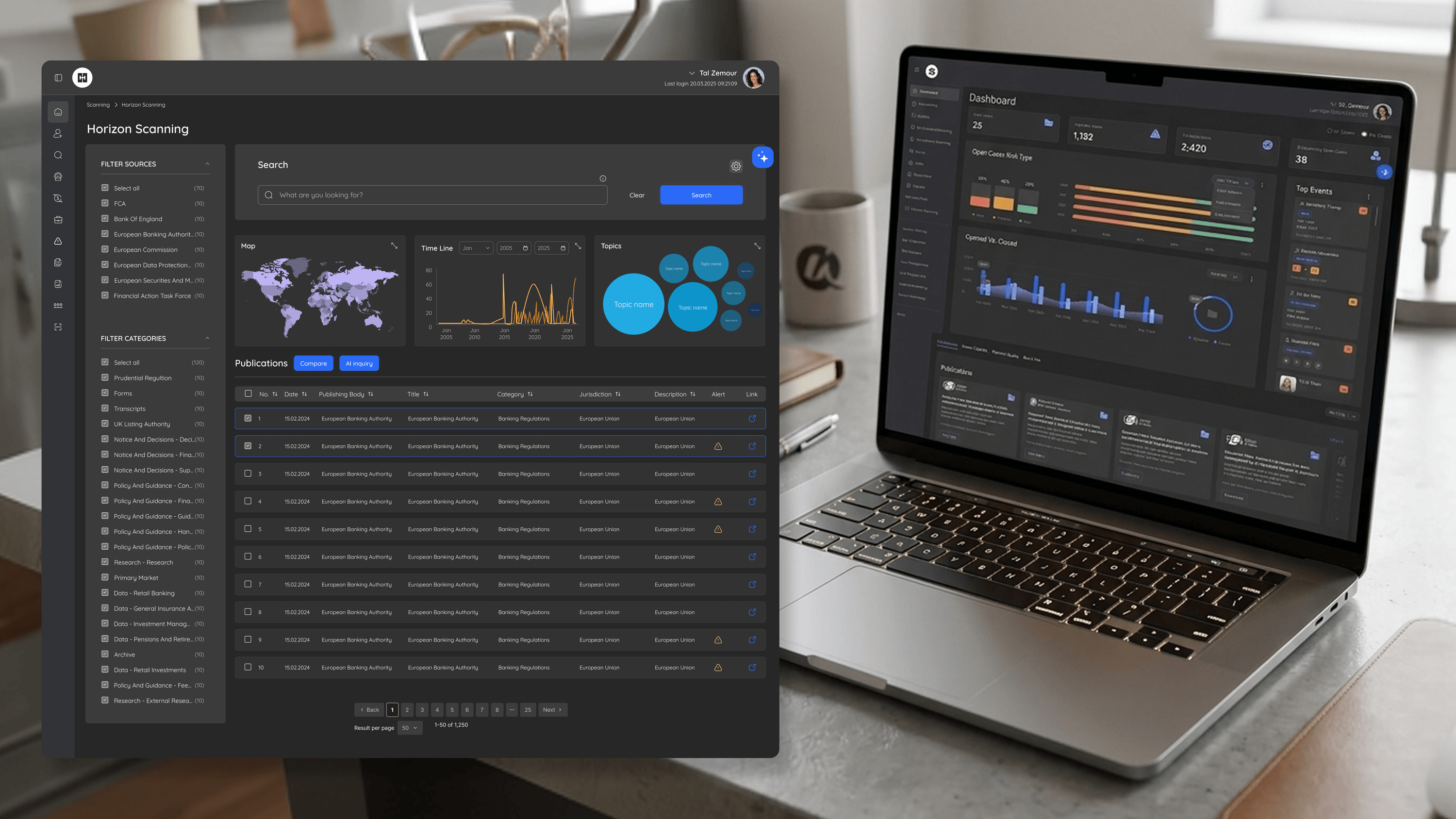
The hardest surface on BlackSwan was the Risk Engine, where admins configure module weights, geographic rules, and PEP/sanctions thresholds. I rebuilt it from nested forms into a visual, real-time, auditable decision system — and micro-interactions are what make 'real-time' actually felt rather than just claimed. As a PM, the question you should ask of any animation is: what does it tell the user? Here, every adjustment to a weight or threshold gives immediate, legible feedback so the admin sees the consequence of a change as they make it, not after a save-and-reload. That responsiveness is what turns configuration from a form-filling chore into a confident decision loop. I kept motion purposeful and restrained — transitions that show cause and effect, state changes that confirm an action registered, drill-downs that orient rather than dazzle. In a domain where a misconfigured threshold has real consequences, gratuitous animation would undermine trust; functional motion builds it. The PM payoff is reduced uncertainty and fewer errors: when the system visibly responds, admins second-guess less and configure with intent. Micro-interactions aren't polish on top of the Risk Engine. They're how it communicates that it heard you.
Related articles

About
Making complicated into easy for users.
Senior product designer with 16+ years in design, 7+ in product/UX, working across complex systems - financial risk platforms, legal operations, healthcare apps, manufacturing tooling and insurance portals. The common thread is depth: products where the data is rich, the users are expert, and the interface has to disappear into the work.