Meytal Dahan
Back to insights

Micro-interactions That Made an Engine's Rules Feel Like Feedback
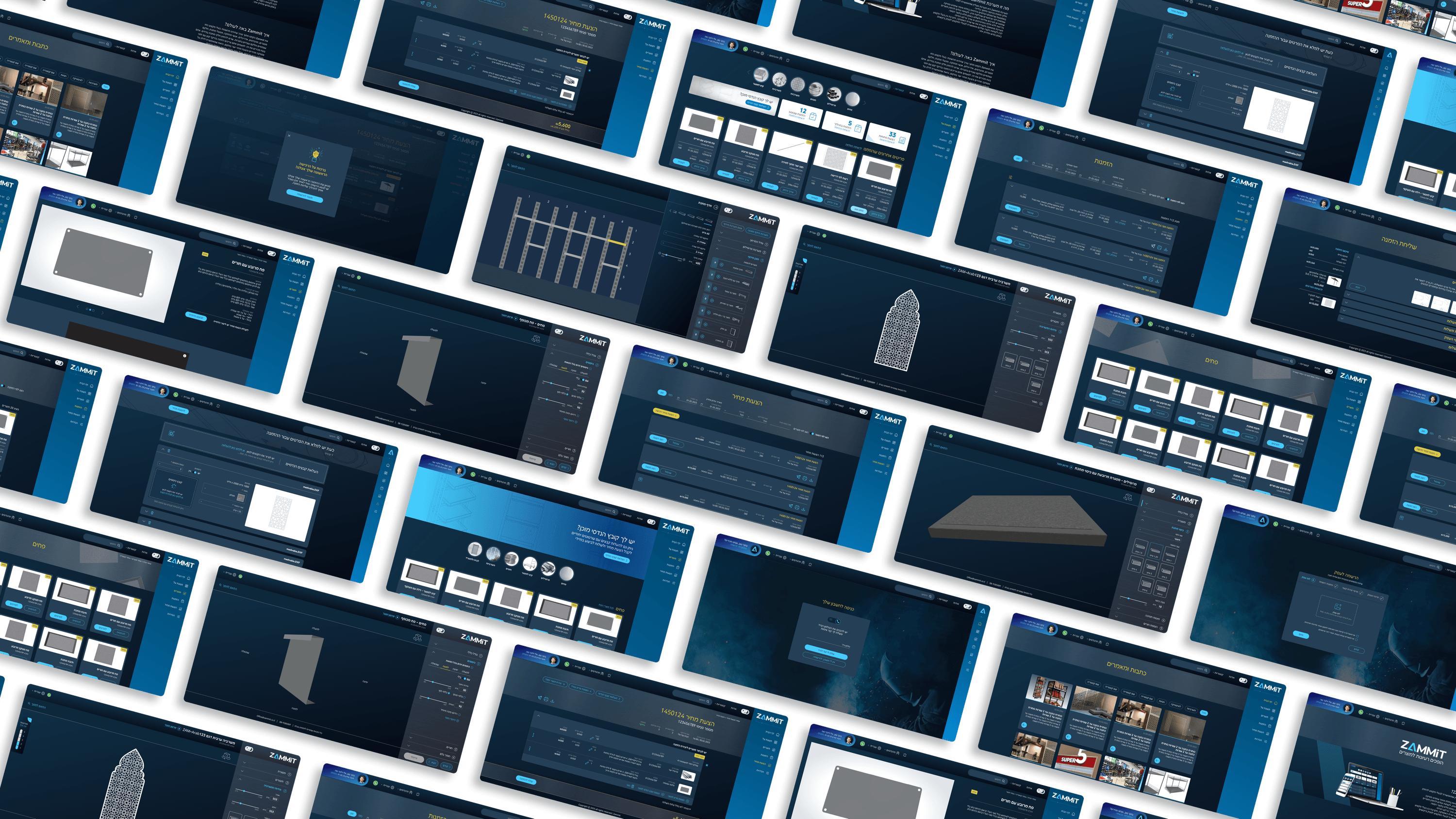
Zammit — Designed the Retail Shelving Planning System - the platform's most demanding configurator, where every dimension, shelf, edge profile, and placement rule is defined - into a spatial design tool retail professionals could use without CAD knowledge.
Built on the DriveWorks engine, Zammit's configurators were rule-heavy: change a dimension and shelf options recalculate, some combinations become invalid, price updates. Without feedback, that logic feels like the system fighting you. Micro-interactions were how I made the rules feel like a conversation instead of a wall. As a PM, the value is in reducing the moments where a user pauses, distrusts the screen, and either re-clicks or gives up. So when a selection updated the configuration, the change was animated just enough to show cause and effect — the summary shifting, a value recalculating, a disabled option visibly settling out of reach rather than vanishing silently. Transitions confirmed that an action registered, which matters enormously in self-serve flows where there's no one to say 'yes, that worked.' I kept motion restrained and purposeful; this is a procurement tool, not an app demanding delight for its own sake. The discipline was always: does this animation explain the engine's behavior, or just dress it up? When it explained — when it turned a hidden rule into visible feedback — it directly protected completion of the quote and checkout flows you care about.

Get in touch

Have a project in mind?

Drop a line. Meytalyav@gmail.com

Related articles

Zammit
Project ManagersUsability Testing

Testing a Spatial Configurator Without CAD

On Zammit's shelving configurator, we asked people to lay out custom shelving — dimensions, shelf count, depth, placement — with zero CAD knowledge. That is a usability risk you cannot hand-wave. So I ran testing as a recurring checkpoint tied to delivery milestones, not a one-off before launch. The payoff is for project managers as much as designers: testing turns a scary, vague risk ('can buyers do this without a salesperson?') into specific, scheduled, fixable issues. And inside an engine with real constraints, testing early tells you which problems are worth engineering time and which a better sequence solves for free. Predictability beats surprises.

Read
Zammit
Project ManagersDelivery & Handoff to Development

Handing Off 40 Configurators Without Losing the Thread

Handing off ~40 configurators, 25 e-commerce flows, and 6 onepagers — solo, over ~2 years — taught me that handoff isn't an event, it's a rhythm. At that volume the real risk a project manager loses sleep over is drift: checkout behaving one way here, another way there. My defense was deliberate pattern reuse and handing off the decision logic, not just visuals — especially for configurators bound to the DriveWorks engine's rules. Shared patterns are schedule insurance: estimates hold, review cycles shrink, and developers implement without guessing. Clear intent plus clear constraints beats a backlog of clarifying questions every time.

Read
Zammit
Product Managers

Designing Planning Systems for the Factory Floor: How Do You Translate Industrial Logic Into an Interface Operators Actually Love?

Product managers in industrial domains, don't impose a consumer-product UX paradigm on production operators. They're professionals with years of experience who work in shifts. In the manufacturing platform project we designed a system with aggressive shortcuts and a screen flow tailored to repetitive actions. Respect for professionalism = fast adoption.

Read
Meytal Dahan

About

Making complicated into easy for users.

Senior product designer with a decade of work across complex systems - financial risk platforms, legal operations, healthcare apps, manufacturing tooling and insurance portals. The common thread is depth: products where the data is rich, the users are expert, and the interface has to disappear into the work.