Meytal Dahan
Back to insights

Managing a Design Project in a Classified Environment: Working Within Information Security Constraints Without Slowing the Pace
Ministry of DefenseProject ManagersDefenseTech / Government
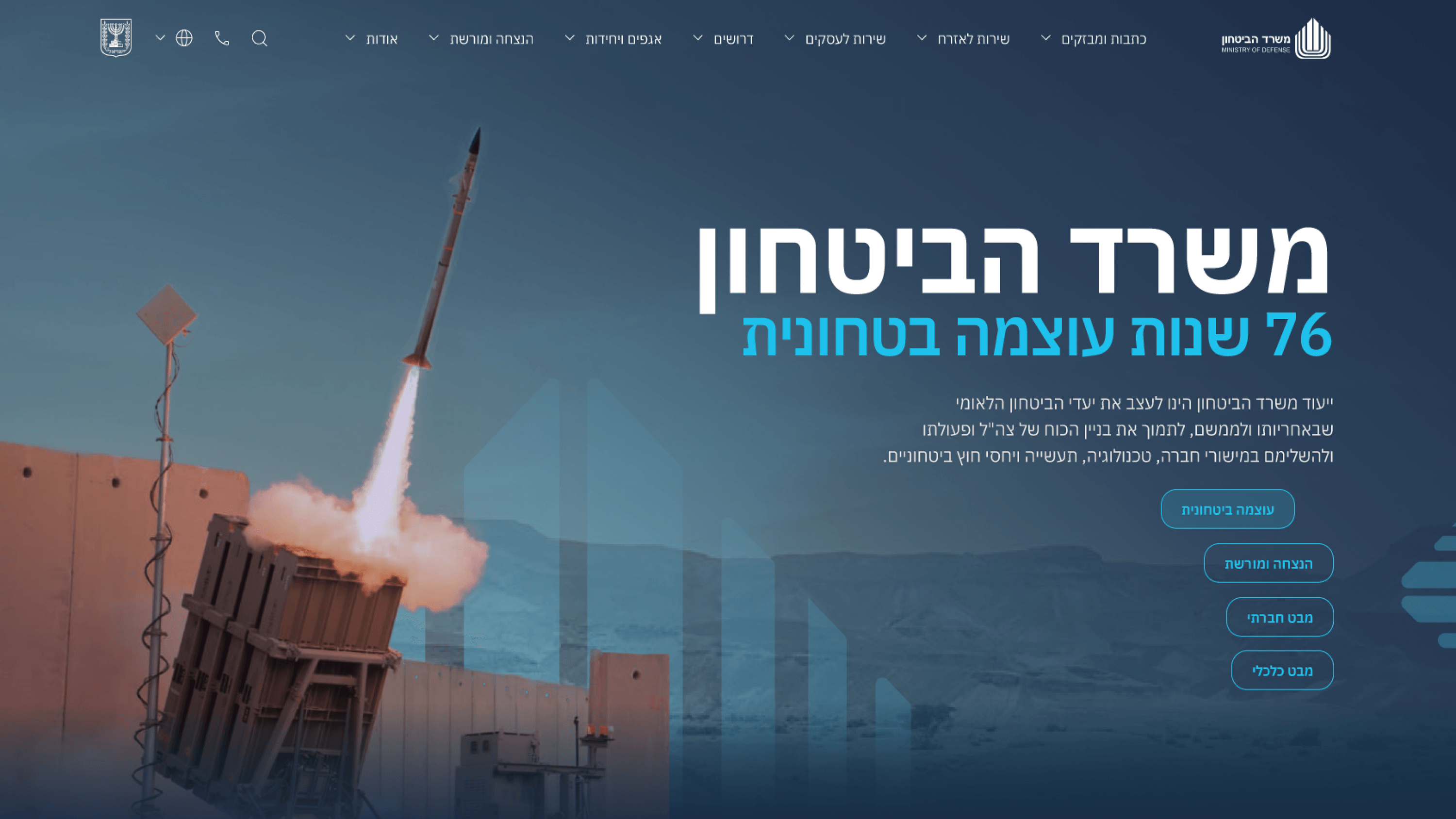
Ministry of Defense — A marketing platform
Managing a design project within a classified system poses challenges that don't exist in a regular tech project. Strict information security rules limit who can see the screens, where they can be worked on, and which tools are permitted. Meetings that require many stakeholders turn into an exercise in complex logistics, and at times physical meetings at the client's facilities are the only ones approved. In the projects I worked on for the Ministry of Defense, the success of on-schedule delivery hinged on the ability to plan every milestone in advance in a way that accounts for the security constraints. Instead of improvising, we built a detailed timeline that factors in the extra time required for every approval, every meeting at the facility, and every stage of clearing a portfolio of work. In addition, we developed a hybrid working methodology: intensive work in the classified environment at key points, and independent work in a regular environment on non-sensitive elements (such as a generic component library, a general design system). This separation cuts down the time wasted on waiting and bureaucracy, and lets the project team advance on both fronts in parallel. For project managers leading projects in classified or heavily regulated environments, the insight is this: invest in detailed upfront planning that accounts for all the constraints. The time "wasted" on planning at the start of the project is saved fivefold down the road. Anyone who tries to run fast and crack the security on the fly — falls down halfway through.

Get in touch

Have a project in mind?

Drop a line. Meytalyav@gmail.com

Related articles

Ministry of Defense
Engineering LeadersR&D Collaboration

Designing a public face for serious engineering

The MoD public portal tells citizens about real strategic and security advancements - so the collaboration that mattered most was with the technical side that owns the substance. My constraint as a designer: present serious work credibly, never overclaim it. R&D partners weren't a sign-off gate; they were the source of truth for what 'forward-thinking' could honestly say. The win wasn't agreed pixels - it was a shared standard for representing rigorous work publicly without distortion. Fidelity to the truth is a design requirement, not just an engineering one.

Read
Ministry of Defense
Product ManagersUser Research

Researching a portal that speaks to a whole nation

On the Israel MoD public portal, the research question wasn't 'who is the user' - it was 'who are ALL of them, and where do their needs collide.' Citizens, partners, press, one set of pages. The instinct to pick one persona and optimize would have broken trust with the others. We researched by intent, not demographics. The real deliverable wasn't insights - it was a model that let the roadmap say no with confidence. Research earns its keep when it makes prioritization defensible, not just informed.

Read
Ministry of Defense
Project ManagersDelivery & Handoff to Development

A handoff built to survive the ministry's scrutiny

Handoff on the MoD public portal had high stakes: a public-facing government record where accessibility is an expectation, not a bonus. My PMO-minded goal was simple - kill ambiguity before it becomes rework. Not a Figma dump over the wall, but a sequenced package: responsive system, reusable components, documented states, WCAG-minded specs. Foundations first, so build starts on solid ground. A good handoff doesn't just transfer files - it transfers intent. That's what keeps a high-visibility delivery on schedule.

Read
Meytal Dahan

About

Making complicated into easy for users.

Senior product designer with a decade of work across complex systems - financial risk platforms, legal operations, healthcare apps, manufacturing tooling and insurance portals. The common thread is depth: products where the data is rich, the users are expert, and the interface has to disappear into the work.