
One System, Five Roles: Designing for Reuse in Menora's Agent Zone
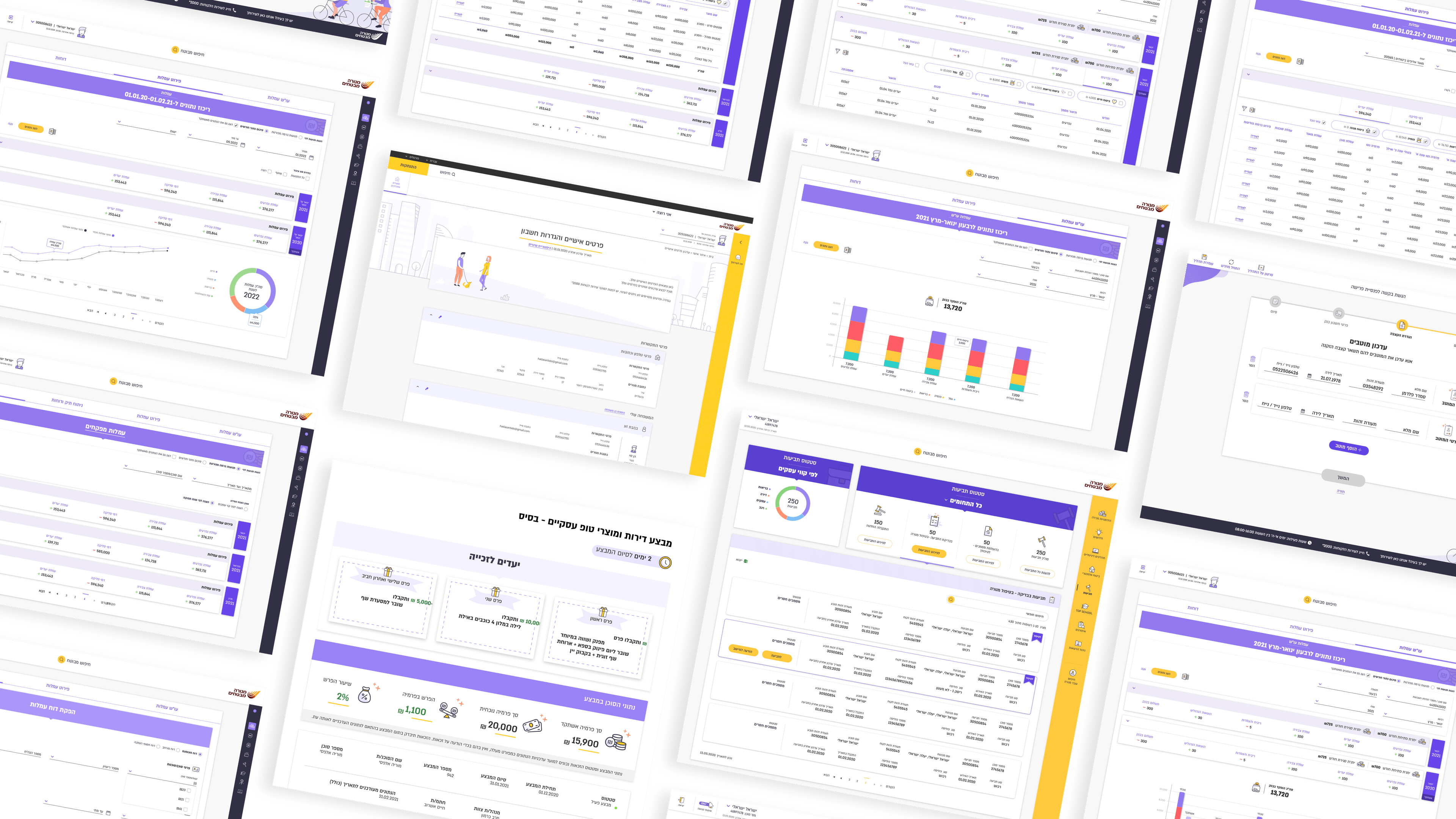
When I came into Menora's Agent Zone as an outsource designer through code-oasis, the hardest engineering reality wasn't a single screen — it was that one sales system had to serve five roles: agent, marketing, district manager, team lead, and underwriter. Each role looks at the same underlying data through its own lens. That's exactly where a component-level system earns its keep. If every role got a bespoke screen, your R&D team inherits five divergent codebases to maintain forever. So I designed the shared primitives — field groups, filter controls, table and detail patterns — to be role-agnostic at the base, with permissions and visible columns as configuration rather than forks. The interface adapts; the components don't multiply. I won't pretend I authored Menora's entire enterprise design system single-handedly — I worked within and contributed to it. But the principle I pushed for is one CTOs care about: consistency that reduces maintenance surface. Fewer one-off implementations means fewer regression paths, easier QA, and predictable behavior across surfaces. A design system here isn't a style guide. It's an agreement that the same data, seen five ways, still comes from one source of truth.
Related articles

About
Making complicated into easy for users.
Senior product designer with a decade of work across complex systems - financial risk platforms, legal operations, healthcare apps, manufacturing tooling and insurance portals. The common thread is depth: products where the data is rich, the users are expert, and the interface has to disappear into the work.