Meytal Dahan
Back to insights

i18n Starts in the Layout, Not the String Table
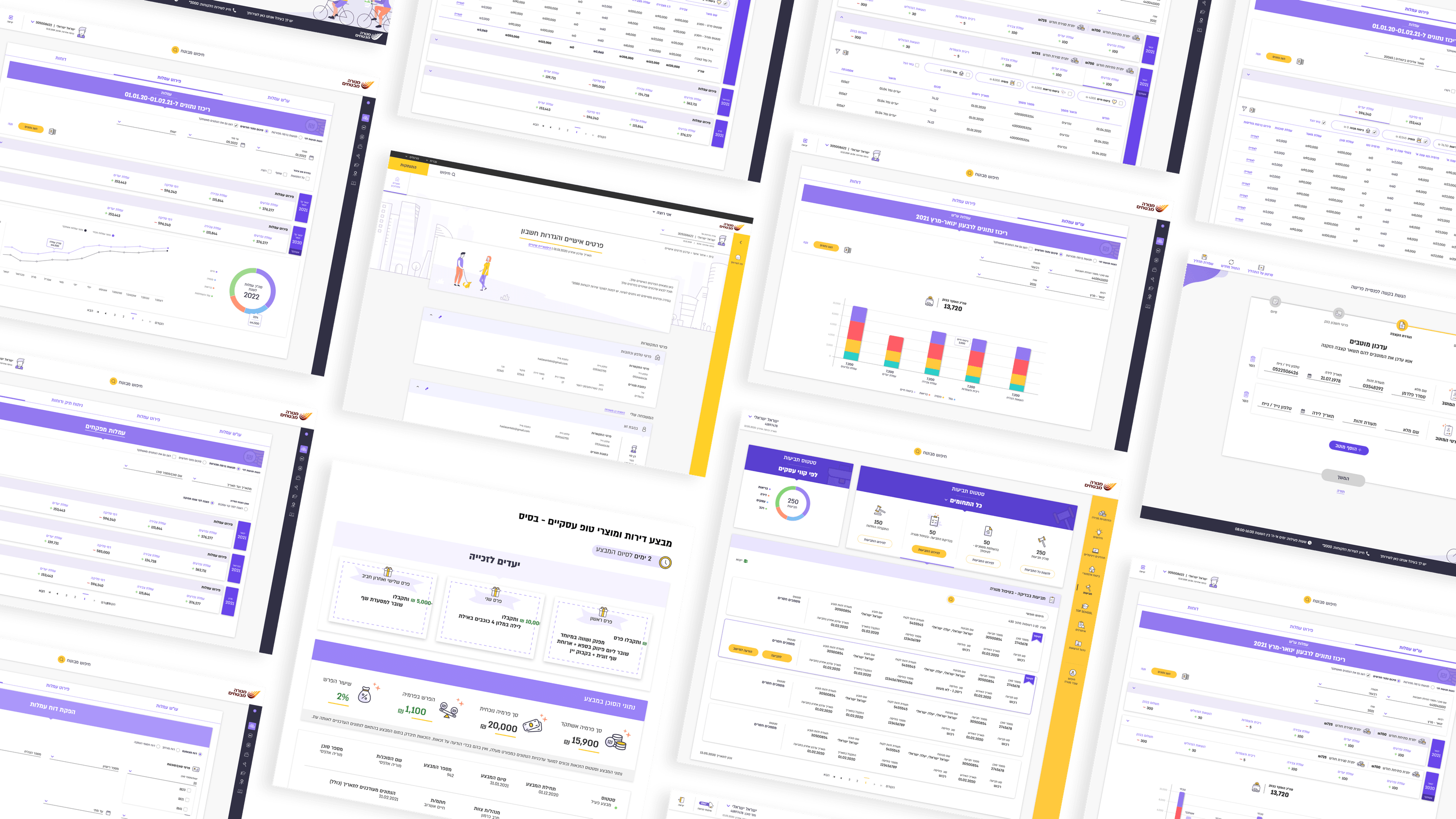
Menora Insurance — Multi-Surface Design Work for Menora Insurance
For R&D leaders, i18n often gets framed as a string-extraction task. Designing for an Israeli insurer reframed it for me: the hardest part of internationalization is structural, and it shows up long before you swap a single word. Menora's interfaces are Hebrew-first, which means right-to-left as the default reading direction — and RTL is not a mirror trick you apply at the end. In dense, field-heavy flows like the agent zone, mirroring touches everything: where labels sit relative to inputs, how multi-axis filters read, how tabular data aligns, which way affordances point. If layout decisions assume left-to-right, you inherit a backlog of directional bugs that no translation layer fixes. My recommendation to engineering leaders is to treat direction and layout neutrality as a first-class concern in the component system, the same way you'd treat date or number formatting. Bake bidirectional behavior into the primitives, not the patches. When the underlying components respect direction natively, adding or maintaining a locale becomes configuration rather than rework. The teams that internationalize cheaply are the ones who designed the skeleton to flex from the start.

Get in touch

Have a project in mind?

Drop a line. Meytalyav@gmail.com

Related articles

Menora Insurance
Engineering LeadersIndustry-Specific Accessibility

Accessibility in Field-Dense Insurance Flows

Most accessibility talk stops at contrast on landing pages. In insurance, the hard surface is the field-dense internal tool. On Menora's agent zone — many fields, conditional rules, five role lenses — WCAG means keyboard order through multi-axis filters, screen-reader announcements as conditional fields appear, focus that survives constant state changes. That's architecture, not a finishing pass. The deepest a11y debt hides in the internal tools everyone assumes are 'just for power users.'

Read
Menora Insurance
Project ManagersDocumentation & Organizational Handoff

Documentation That Outlives the Engagement

As an outsource designer on Menora, I knew I'd eventually leave. So I documented for the people who'd stay. Not pretty specs — the reasoning. Why a field appears for an underwriter but not a team lead. Why the fee flow's rules are shaped the way they are. For a PMO: with outside contributors, documentation isn't admin. It's how the work becomes something the organization actually owns.

Read
Menora Insurance
Project Managers

Managing UX in Enterprise Giants: Owning Milestones and Integrating Multi-Stakeholder Requirements

Project managers (PMOs), how many times has your enterprise project stalled because legal or marketing suddenly remembered to weigh in at the 90th minute? The work with Menora Insurance demanded a structured approval method. You lock down a smooth architecture in Figma, get sign-off from every department, and only then run forward. That's how you protect the Gantt.

Read
Meytal Dahan

About

Making complicated into easy for users.

Senior product designer with a decade of work across complex systems - financial risk platforms, legal operations, healthcare apps, manufacturing tooling and insurance portals. The common thread is depth: products where the data is rich, the users are expert, and the interface has to disappear into the work.