Meytal Dahan
Back to insights

The Quiet Feedback Loop: Micro-interactions in High-Stakes Forms
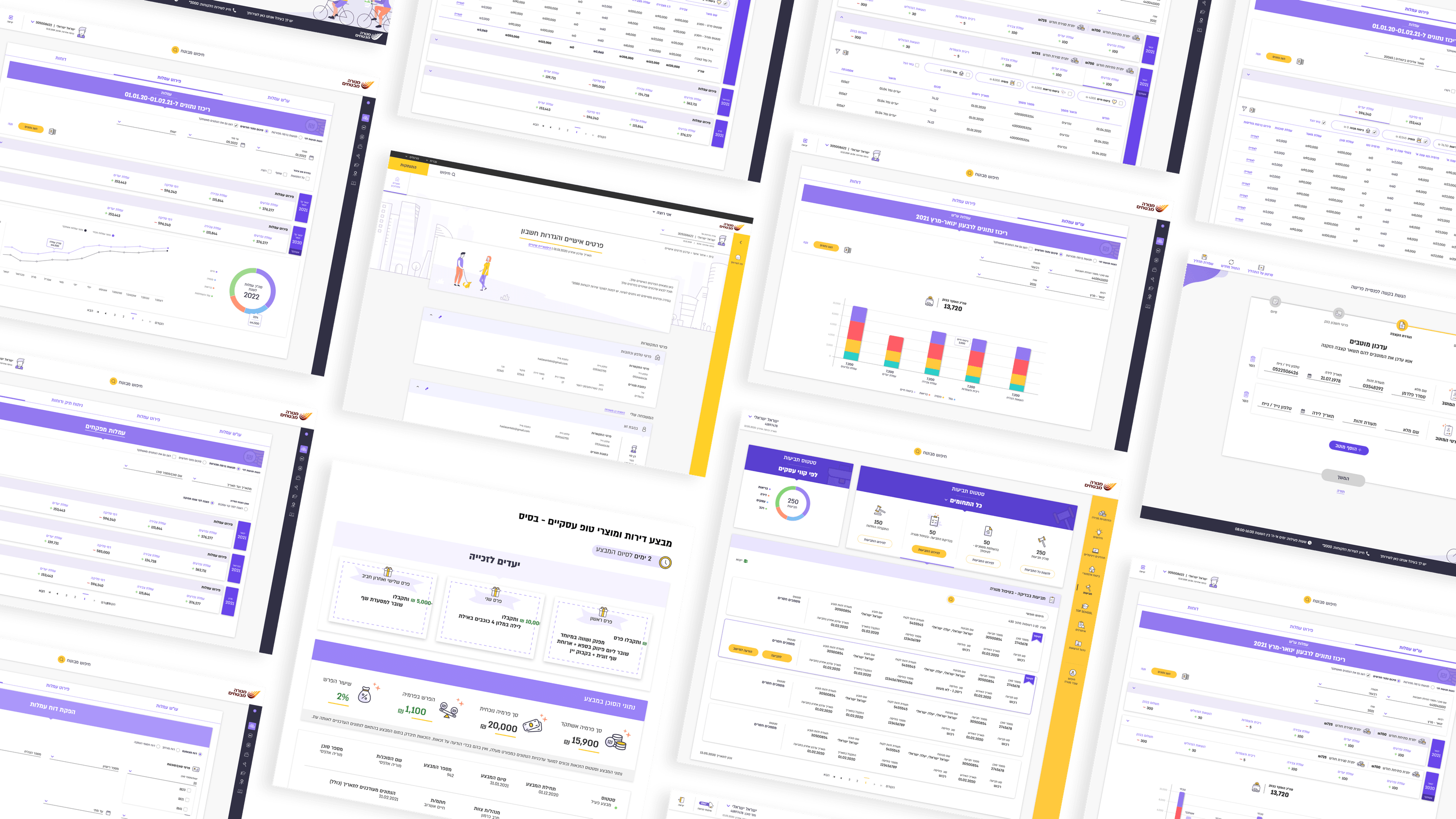
Menora Insurance — Multi-Surface Design Work for Menora Insurance
Micro-interactions get pitched to PMs as delight. On Menora's flows, I'd reframe them as feedback — the difference between a user who trusts the system and one who clicks twice because nothing told them the first click landed. Take the agent-fee flow, whose depth lives in complex multi-axis filtering. When someone adjusts one filter, the interface has to acknowledge it: the state changed, results are updating, here's what's now in scope. That acknowledgment is a micro-interaction. Done well, it's nearly invisible — a transition that explains a change rather than announcing itself. On the B2C side, the same principle governs forms and login: a field validating, a save confirming, a state moving from "editing" to "saved." For a PM, the discipline is restraint. Animation that draws attention to itself is a tax on every repeat user, and these are tools people live in all day. The test I apply: does this motion answer a question the user is silently asking — "did that work?" "what changed?" "where am I now?" If yes, it earns its place. If it's there to look modern, it's friction wearing a nice coat. Motion should clarify causality, never perform.

Get in touch

Have a project in mind?

Drop a line. Meytalyav@gmail.com

Related articles

Menora Insurance
Engineering LeadersIndustry-Specific Accessibility

Accessibility in Field-Dense Insurance Flows

Most accessibility talk stops at contrast on landing pages. In insurance, the hard surface is the field-dense internal tool. On Menora's agent zone — many fields, conditional rules, five role lenses — WCAG means keyboard order through multi-axis filters, screen-reader announcements as conditional fields appear, focus that survives constant state changes. That's architecture, not a finishing pass. The deepest a11y debt hides in the internal tools everyone assumes are 'just for power users.'

Read
Menora Insurance
Project ManagersDocumentation & Organizational Handoff

Documentation That Outlives the Engagement

As an outsource designer on Menora, I knew I'd eventually leave. So I documented for the people who'd stay. Not pretty specs — the reasoning. Why a field appears for an underwriter but not a team lead. Why the fee flow's rules are shaped the way they are. For a PMO: with outside contributors, documentation isn't admin. It's how the work becomes something the organization actually owns.

Read
Menora Insurance
Project Managers

Managing UX in Enterprise Giants: Owning Milestones and Integrating Multi-Stakeholder Requirements

Project managers (PMOs), how many times has your enterprise project stalled because legal or marketing suddenly remembered to weigh in at the 90th minute? The work with Menora Insurance demanded a structured approval method. You lock down a smooth architecture in Figma, get sign-off from every department, and only then run forward. That's how you protect the Gantt.

Read
Meytal Dahan

About

Making complicated into easy for users.

Senior product designer with a decade of work across complex systems - financial risk platforms, legal operations, healthcare apps, manufacturing tooling and insurance portals. The common thread is depth: products where the data is rich, the users are expert, and the interface has to disappear into the work.