Meytal Dahan
Back to insights

Where a Government Portal's ROI Actually Lives
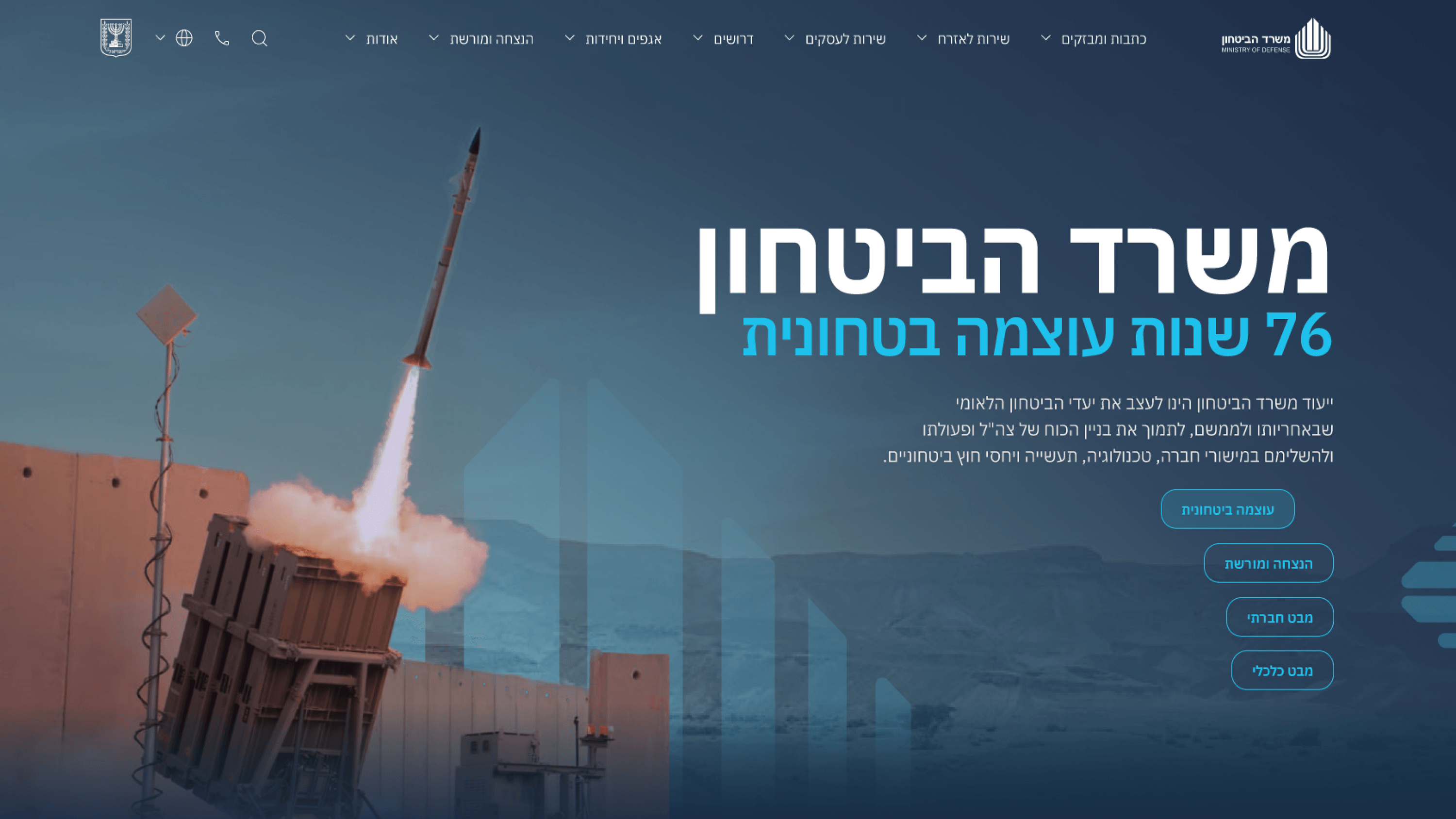
Ministry of Defense — A marketing platform
When the client is a ministry rather than a commercial business, the instinct is that ROI doesn't apply. On the Ministry of Defense public communications portal, I'd argue the opposite: every feature has a return, it's just denominated in trust rather than revenue. The brief was a tone problem first - project authority and forward-thinking leadership without bureaucratic dryness or marketing brightness. So when I weighed where to invest the design effort, I asked which features changed how citizens, partners and press read the institution. The milestone storytelling layout earned its place because it turned a list of achievements into a credible record people could scan and cite. The responsive treatment earned its place because a portal that breaks on a phone quietly erodes the authority the whole site exists to project. Features that only added motion or decoration didn't make the cut - they cost trust instead of building it. For a leader signing off on scope, that's the real ROI conversation: not how much we built, but whether each piece moved perception in the direction the institution needs. On a public portal, perception is the product.

Get in touch

Have a project in mind?

Drop a line. Meytalyav@gmail.com

Related articles

Ministry of Defense
Engineering LeadersR&D Collaboration

Designing a public face for serious engineering

The MoD public portal tells citizens about real strategic and security advancements - so the collaboration that mattered most was with the technical side that owns the substance. My constraint as a designer: present serious work credibly, never overclaim it. R&D partners weren't a sign-off gate; they were the source of truth for what 'forward-thinking' could honestly say. The win wasn't agreed pixels - it was a shared standard for representing rigorous work publicly without distortion. Fidelity to the truth is a design requirement, not just an engineering one.

Read
Ministry of Defense
Product ManagersUser Research

Researching a portal that speaks to a whole nation

On the Israel MoD public portal, the research question wasn't 'who is the user' - it was 'who are ALL of them, and where do their needs collide.' Citizens, partners, press, one set of pages. The instinct to pick one persona and optimize would have broken trust with the others. We researched by intent, not demographics. The real deliverable wasn't insights - it was a model that let the roadmap say no with confidence. Research earns its keep when it makes prioritization defensible, not just informed.

Read
Ministry of Defense
Project ManagersDelivery & Handoff to Development

A handoff built to survive the ministry's scrutiny

Handoff on the MoD public portal had high stakes: a public-facing government record where accessibility is an expectation, not a bonus. My PMO-minded goal was simple - kill ambiguity before it becomes rework. Not a Figma dump over the wall, but a sequenced package: responsive system, reusable components, documented states, WCAG-minded specs. Foundations first, so build starts on solid ground. A good handoff doesn't just transfer files - it transfers intent. That's what keeps a high-visibility delivery on schedule.

Read
Meytal Dahan

About

Making complicated into easy for users.

Senior product designer with a decade of work across complex systems - financial risk platforms, legal operations, healthcare apps, manufacturing tooling and insurance portals. The common thread is depth: products where the data is rich, the users are expert, and the interface has to disappear into the work.