Meytal Dahan
Back to insights

One Design System Across 40 Configurators and a Rigid Engine
ZammitEngineering LeadersDesign SystemsManufacturing / B2B Procurement
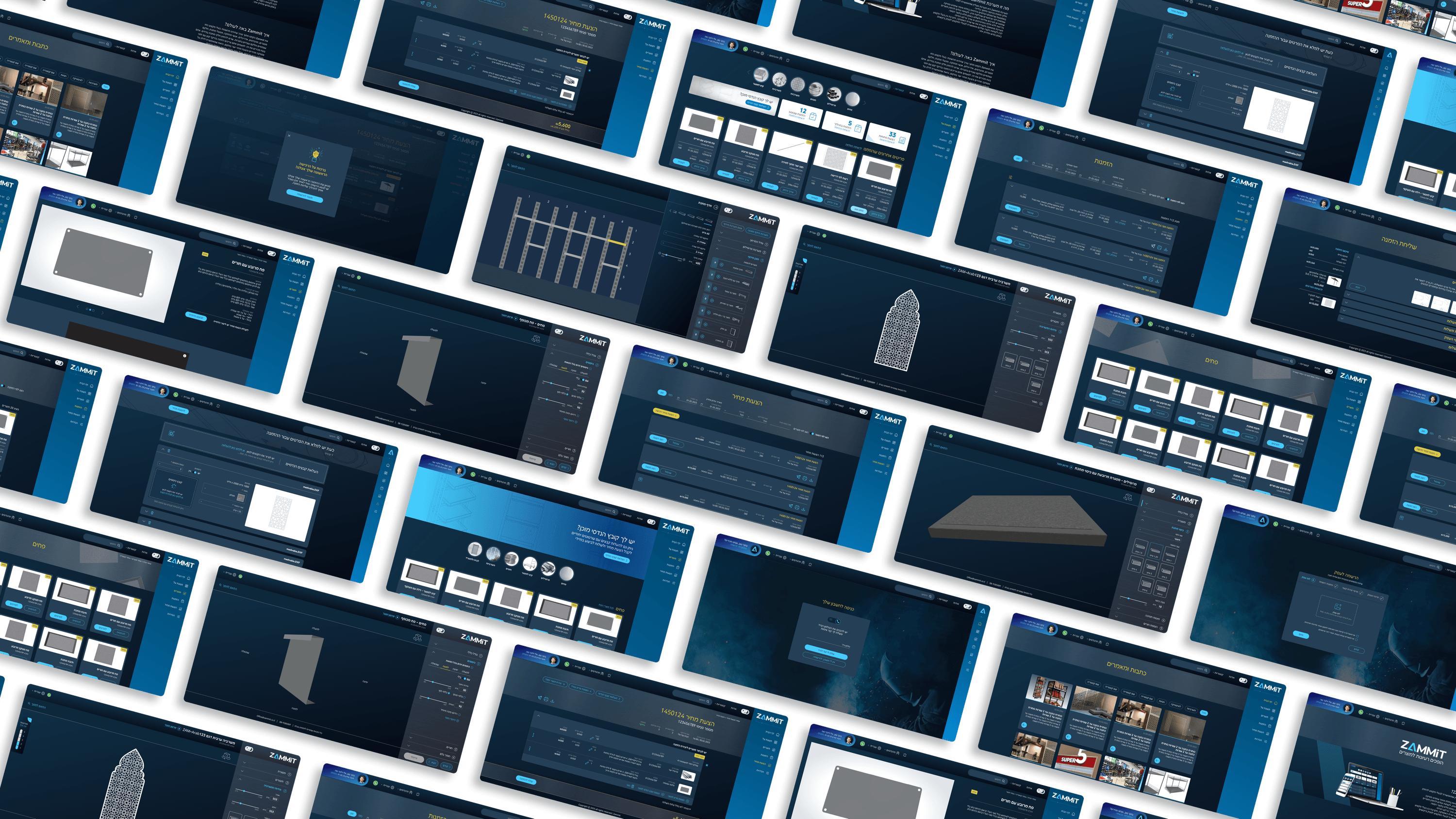
Zammit — Designed the Retail Shelving Planning System - the platform's most demanding configurator, where every dimension, shelf, edge profile, and placement rule is defined - into a spatial design tool retail professionals could use without CAD knowledge.
When you're a solo designer delivering roughly 40 product configurators across ten categories, plus 25 e-commerce flows, a Design System stops being a nice-to-have and becomes the only way the work scales. At Zammit I built one inside the constraints of the DriveWorks configurator engine — which is the part that matters to an R&D team. The engine dictated how inputs rendered, how rules cascaded, how state was held. My system had to be expressive enough for spatial shelving configuration yet disciplined enough that a contractor flow and a retail flow felt like one product. I standardized input patterns, validation states, quote and checkout components, and the OTP and account surfaces so engineering wasn't re-deciding the same interaction forty times. The payoff for your team is predictability: fewer bespoke components to maintain, consistent behavior to test, and a shared vocabulary between design and the engine's rule layer. A Design System under an engine constraint isn't about visual polish — it's about reducing the surface area your developers have to reason about, so adding the next configurator is composition, not invention.

Get in touch

Have a project in mind?

Drop a line. Meytalyav@gmail.com

Related articles

Zammit
Project ManagersUsability Testing

Testing a Spatial Configurator Without CAD

On Zammit's shelving configurator, we asked people to lay out custom shelving — dimensions, shelf count, depth, placement — with zero CAD knowledge. That is a usability risk you cannot hand-wave. So I ran testing as a recurring checkpoint tied to delivery milestones, not a one-off before launch. The payoff is for project managers as much as designers: testing turns a scary, vague risk ('can buyers do this without a salesperson?') into specific, scheduled, fixable issues. And inside an engine with real constraints, testing early tells you which problems are worth engineering time and which a better sequence solves for free. Predictability beats surprises.

Read
Zammit
Product ManagersMicro-interactions & Animation

Micro-interactions That Made an Engine's Rules Feel Like Feedback

Rule-heavy configurators feel like the system is fighting you — unless feedback shows why. On Zammit, micro-interactions turned the engine's logic into a conversation: a value recalculating, the summary shifting, an invalid option visibly settling out of reach instead of vanishing. PMs, the test for every animation: does it explain the system's behavior, or just decorate it? Only the former protects flow completion.

Read
Zammit
Project ManagersDelivery & Handoff to Development

Handing Off 40 Configurators Without Losing the Thread

Handing off ~40 configurators, 25 e-commerce flows, and 6 onepagers — solo, over ~2 years — taught me that handoff isn't an event, it's a rhythm. At that volume the real risk a project manager loses sleep over is drift: checkout behaving one way here, another way there. My defense was deliberate pattern reuse and handing off the decision logic, not just visuals — especially for configurators bound to the DriveWorks engine's rules. Shared patterns are schedule insurance: estimates hold, review cycles shrink, and developers implement without guessing. Clear intent plus clear constraints beats a backlog of clarifying questions every time.

Read
Meytal Dahan

About

Making complicated into easy for users.

Senior product designer with a decade of work across complex systems - financial risk platforms, legal operations, healthcare apps, manufacturing tooling and insurance portals. The common thread is depth: products where the data is rich, the users are expert, and the interface has to disappear into the work.