
Digitizing a Factory One Configurator at a Time
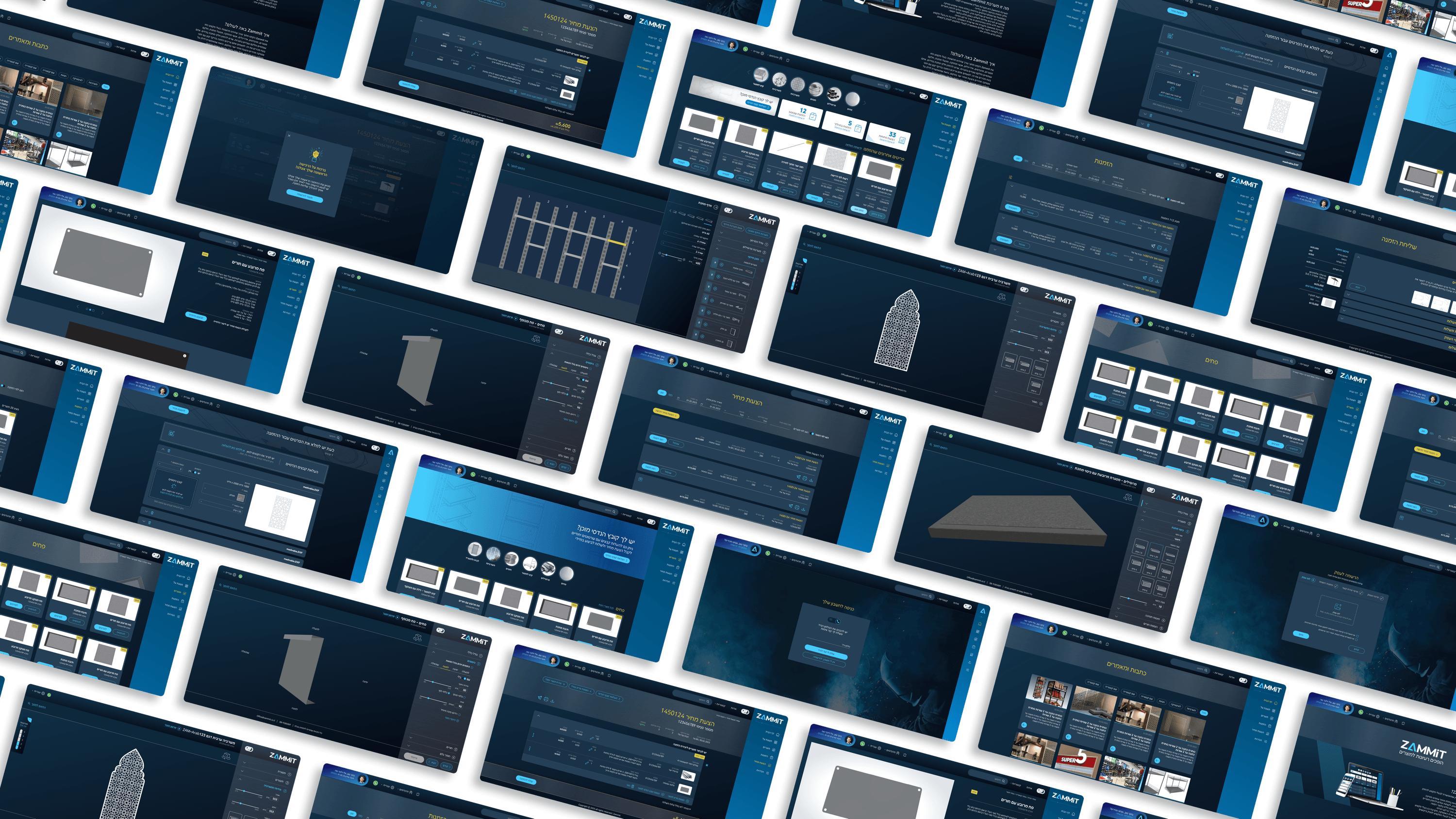
Founders ask me how you take something as messy as a custom manufacturing business and turn it into self-serve software without boiling the ocean. With Zammit, the honest answer is: you don't ship all forty configurators at once. You prove the model first. The premise was bold — let engineers, architects, contractors and retail professionals order complex made-to-order laser-cut products with no sales intermediary. That's a big claim to validate. So the work staggered naturally from a defensible core toward the full catalog of roughly forty configurators across ten categories, plus the e-commerce flows around them: quote, account, OTP, checkout, tracking. The flagship Retail Shelving Planner was where the full-version ambition became real — a spatial configurator usable without CAD. Two things kept the expansion honest. First, the DriveWorks engine's constraints forced discipline; you can't promise a configuration the factory can't fabricate. Second, I visited the factory, because an MVP built on a fantasy of how things are made collapses at full scale. The lesson for founders: let real manufacturing rules, not your roadmap optimism, decide what 'full version' is even allowed to mean.
Related articles

About
Making complicated into easy for users.
Senior product designer with a decade of work across complex systems - financial risk platforms, legal operations, healthcare apps, manufacturing tooling and insurance portals. The common thread is depth: products where the data is rich, the users are expert, and the interface has to disappear into the work.