Meytal Dahan
Back to insights

One Platform, Many Buyers: Personalization Without Fragmentation
ZammitCEOsPersonalization & Tailored ModelsManufacturing / B2B Procurement
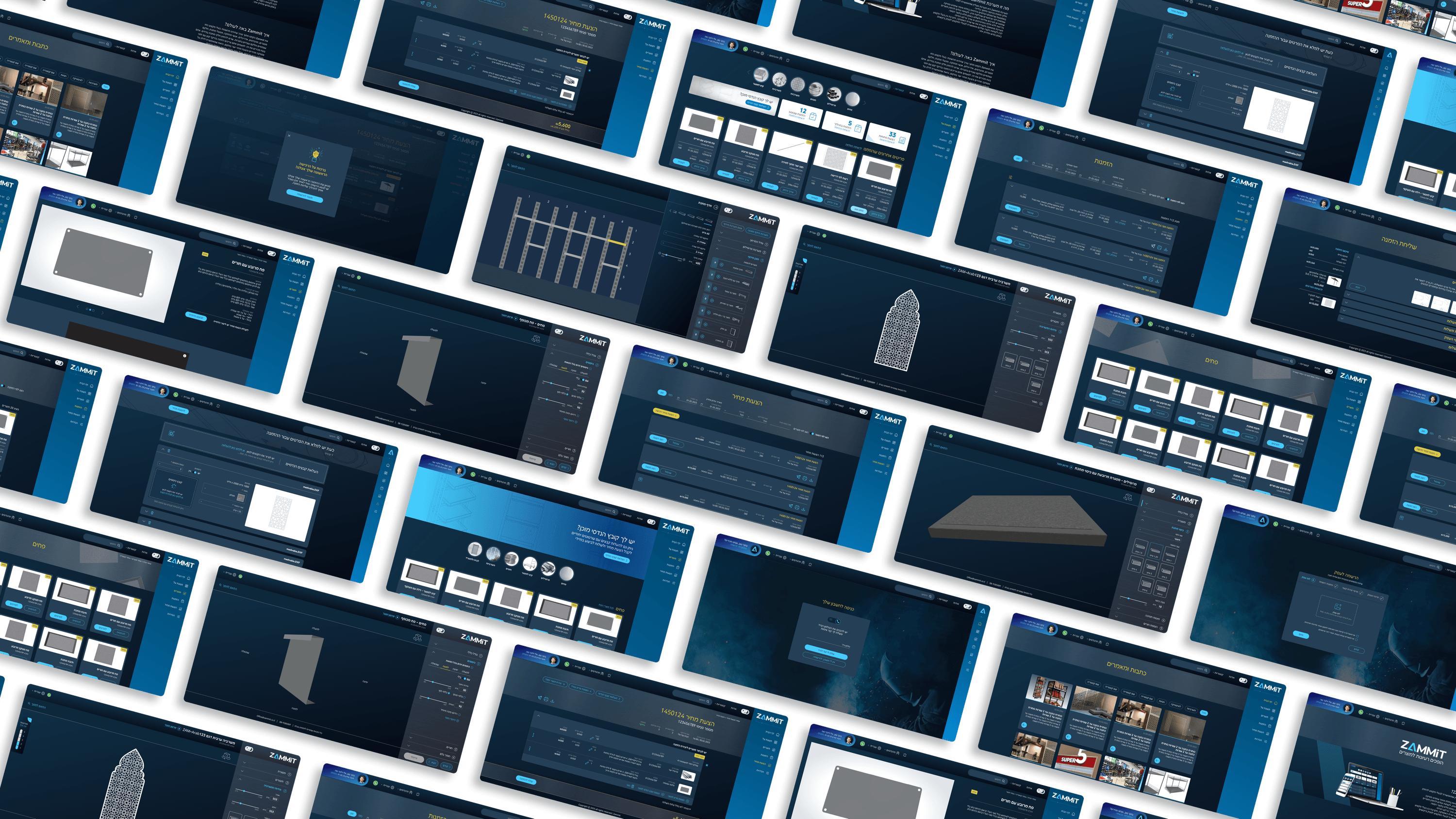
Zammit — Designed the Retail Shelving Planning System - the platform's most demanding configurator, where every dimension, shelf, edge profile, and placement rule is defined - into a spatial design tool retail professionals could use without CAD knowledge.
Personalization sounds expensive until you realize it's often what lets one platform serve very different buyers without building several. Zammit had to speak to engineers, architects, contractors and retail professionals — people with genuinely different vocabularies, priorities and levels of technical fluency, all purchasing custom laser-cut products through the same self-serve system. The answer wasn't a separate product per audience. It was tailoring at the edges of a shared core: six segment onepagers that meet each buyer in their own language and frame the value the way that segment hears it, feeding into the same roughly forty configurators and shared e-commerce flows underneath. That's the CEO-relevant trade-off. Over-personalize and you fragment your build into systems you can't maintain; under-personalize and the architect bounces because the product reads like it was written for a contractor. The flagship shelving planner sat at this seam — one configurator, presented so a retail professional could use it without CAD knowledge while still producing a manufacturable spec. The strategic principle I'd defend: personalize the framing and entry points generously, but keep the engine and flows unified. Tailored experiences, singular product.

Get in touch

Have a project in mind?

Drop a line. Meytalyav@gmail.com

Related articles

Zammit
Project ManagersUsability Testing

Testing a Spatial Configurator Without CAD

On Zammit's shelving configurator, we asked people to lay out custom shelving — dimensions, shelf count, depth, placement — with zero CAD knowledge. That is a usability risk you cannot hand-wave. So I ran testing as a recurring checkpoint tied to delivery milestones, not a one-off before launch. The payoff is for project managers as much as designers: testing turns a scary, vague risk ('can buyers do this without a salesperson?') into specific, scheduled, fixable issues. And inside an engine with real constraints, testing early tells you which problems are worth engineering time and which a better sequence solves for free. Predictability beats surprises.

Read
Zammit
Product ManagersMicro-interactions & Animation

Micro-interactions That Made an Engine's Rules Feel Like Feedback

Rule-heavy configurators feel like the system is fighting you — unless feedback shows why. On Zammit, micro-interactions turned the engine's logic into a conversation: a value recalculating, the summary shifting, an invalid option visibly settling out of reach instead of vanishing. PMs, the test for every animation: does it explain the system's behavior, or just decorate it? Only the former protects flow completion.

Read
Zammit
Project ManagersDelivery & Handoff to Development

Handing Off 40 Configurators Without Losing the Thread

Handing off ~40 configurators, 25 e-commerce flows, and 6 onepagers — solo, over ~2 years — taught me that handoff isn't an event, it's a rhythm. At that volume the real risk a project manager loses sleep over is drift: checkout behaving one way here, another way there. My defense was deliberate pattern reuse and handing off the decision logic, not just visuals — especially for configurators bound to the DriveWorks engine's rules. Shared patterns are schedule insurance: estimates hold, review cycles shrink, and developers implement without guessing. Clear intent plus clear constraints beats a backlog of clarifying questions every time.

Read
Meytal Dahan

About

Making complicated into easy for users.

Senior product designer with a decade of work across complex systems - financial risk platforms, legal operations, healthcare apps, manufacturing tooling and insurance portals. The common thread is depth: products where the data is rich, the users are expert, and the interface has to disappear into the work.