
Managing a Digital Project in Healthcare: Navigating Regulation, Medical Approvals, and Timelines
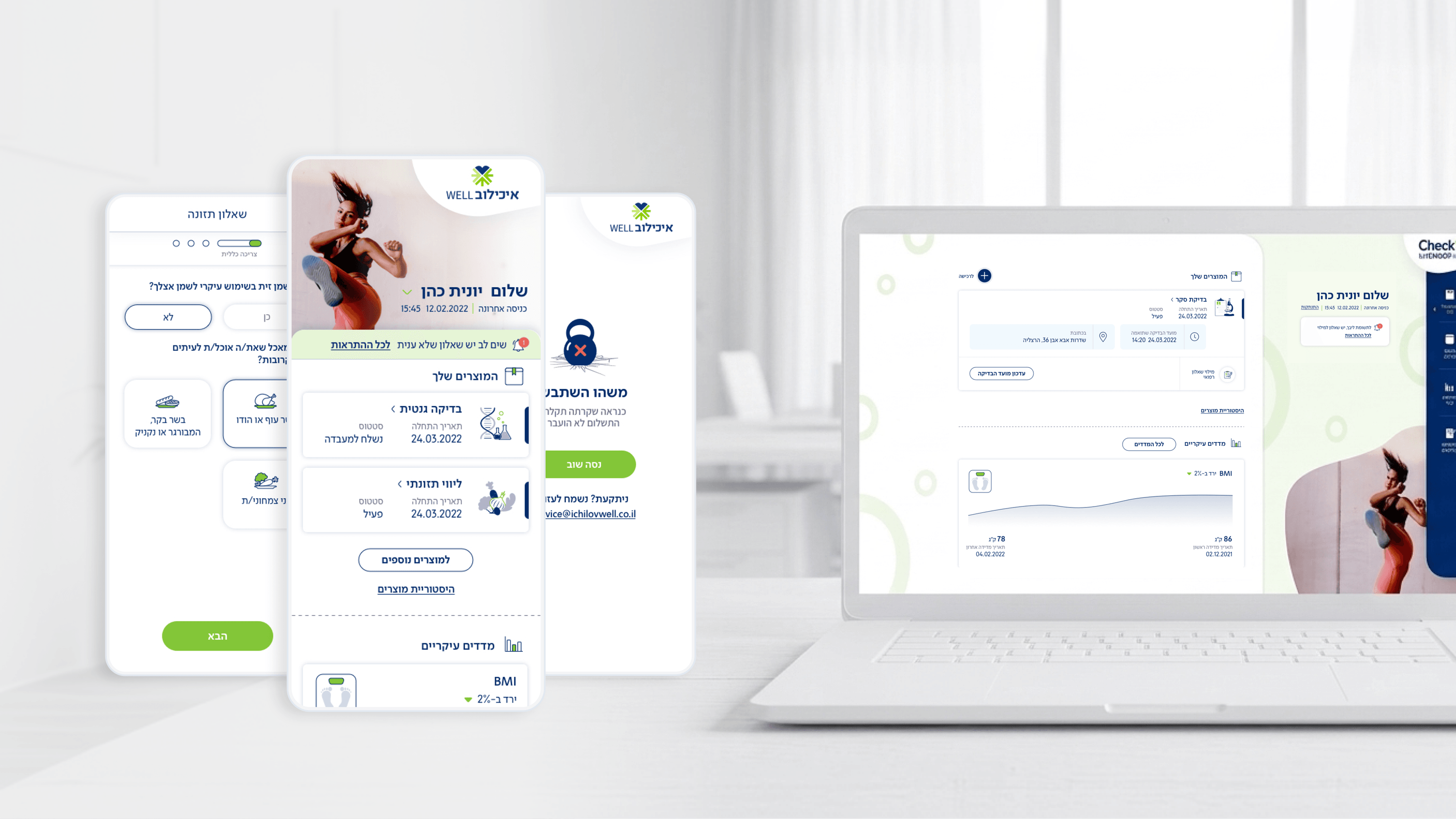
Managing a product design project for a medical body like Ichilov Hospital is a managerial task that is completely different from a regular tech project. You need to coordinate among a large number of stakeholders, none of whom are digital experts: doctors, department heads, nurses, the hospital's IT teams, medical regulators, and sometimes even the Ministry of Health. Every approval takes time, and every small UX change can send the project into yet another long review cycle.
In the Movement project, the working methodology was based on a structured separation between decision layers. The medical team approved "what" the system does (the test protocol, the order of information, the health alerts), while the design and development teams advanced in parallel on "how" the system presents it. This separation made it possible to move forward on the visual work without waiting for every medical approval, and to merge the components at predefined milestones.
In addition, every sensitive User Flow was accompanied by detailed documentation of "medical edge cases" – what happens if the user stops the test midway? What if they enter invalid data? Documenting this from the early stages of the project prevented the medical team from raising late comments that would have required going back to designing from scratch.
For project managers in the medical world, the key insight is: invest in documentation infrastructure and layer separation at the start of the project. It will look unnecessary at first, but it will save you months down the line.
Related articles

About
Making complicated into easy for users.
Senior product designer with a decade of work across complex systems - financial risk platforms, legal operations, healthcare apps, manufacturing tooling and insurance portals. The common thread is depth: products where the data is rich, the users are expert, and the interface has to disappear into the work.