
Designing a Configurator With Complex Logic: How Do You Prevent Performance Collapse on 3D Display Screens?
Engineering leaders working on product configurators know this is a project that combines especially complex front-end challenges. 3D displays, real-time price and availability calculations, rendering of fabrics and colors — all of these require optimization so they don't crater the user experience on mobile or on older machines.
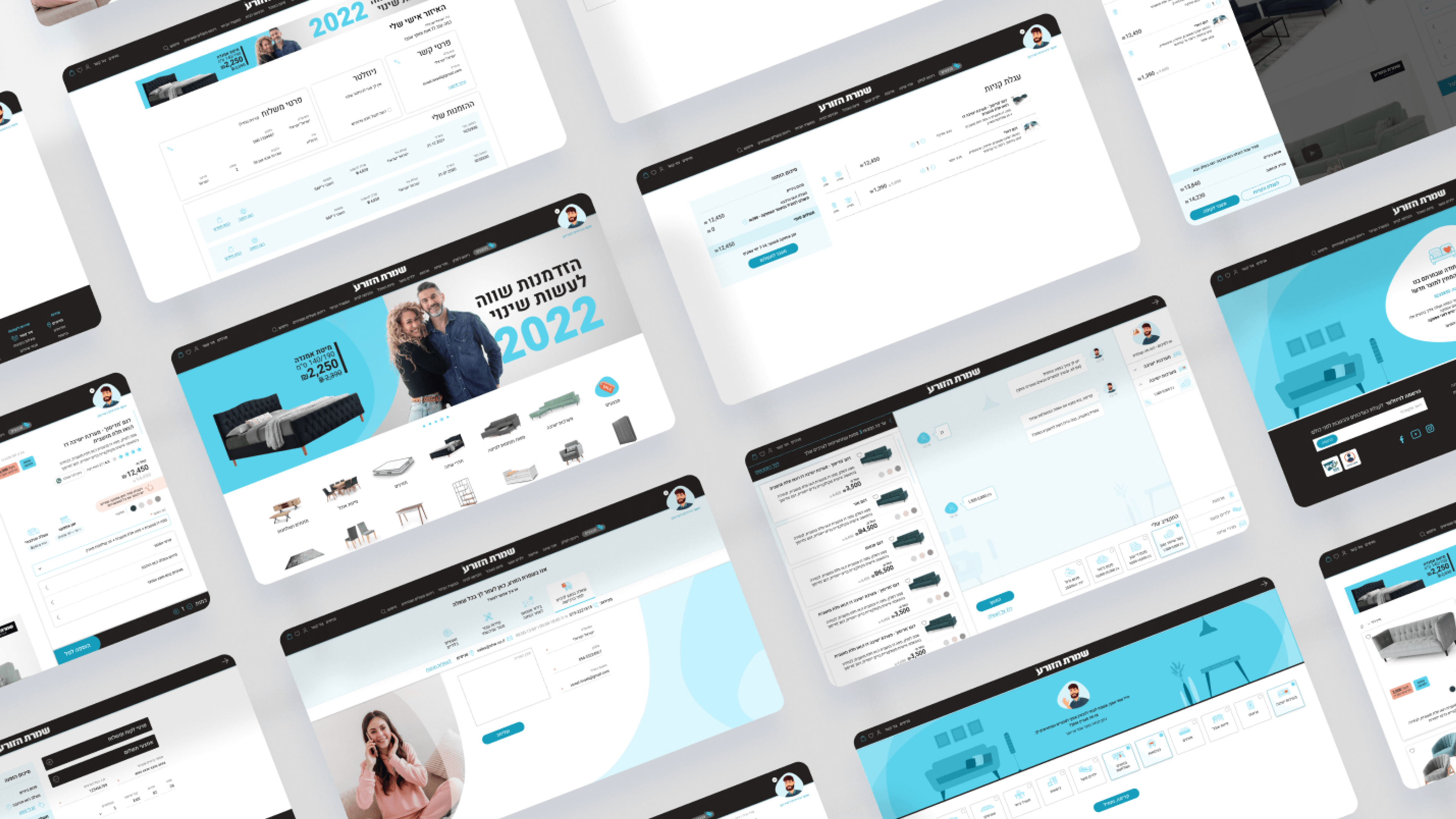
In the Shomrat Hazorea project, the configurator was designed in close collaboration with the technology team. Instead of designing a "heavy" experience that compromises performance, we developed a Progressive Loading system — the system first loads the base representation of the product (geometry), and only afterward loads the finish layers (textures, materials). This lets the customer see the piece of furniture quickly, even on a slow connection.
In addition, every design decision went through a "Performance Impact" review. Is a smooth animation transition worth the cost of 100ms in load time? Are the realistic shadows worth the load on the GPU? The answers were settled together with the development team, based on real-world metrics and not just on "what looks best."
Add to that the Figma component library that was adapted to real data structures — not just "Lorem Ipsum" but real examples of finishes, prices, and lead times. The development team received a deliverable they could implement from day one without having to work through the logic themselves.
For CTOs working on complex product configurators, the takeaway is this: demand that your product designer work with a Performance-First mindset. A designer who ignores performance constraints creates experiences that can't work in production.
Related articles

About
Making complicated into easy for users.
Senior product designer with a decade of work across complex systems - financial risk platforms, legal operations, healthcare apps, manufacturing tooling and insurance portals. The common thread is depth: products where the data is rich, the users are expert, and the interface has to disappear into the work.