Meytal Dahan
Back to insights

Enterprise-Grade E-Commerce Projects: Why Your Studio Needs an Expert in Complex Configurators
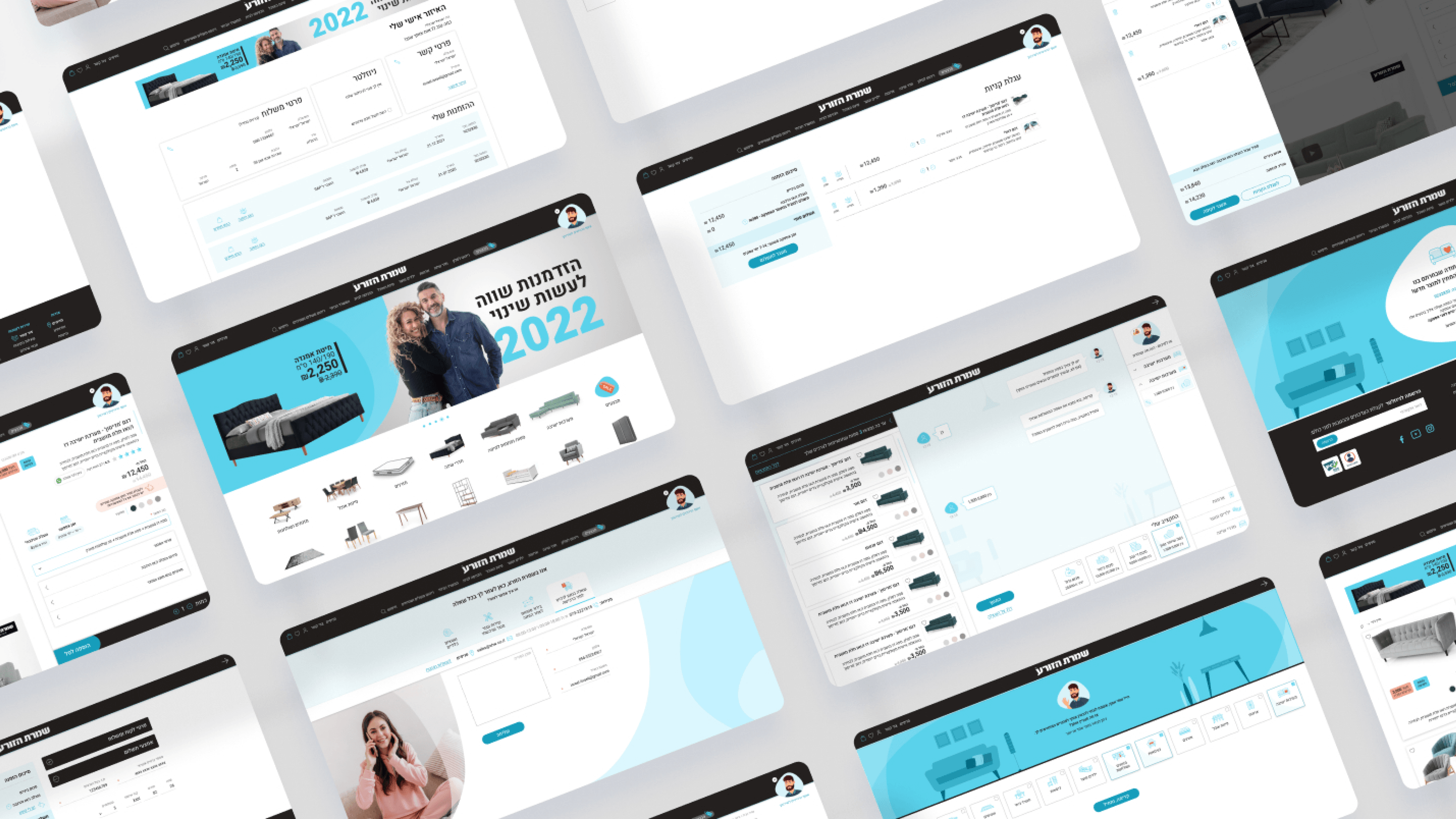
Shomrat Hazorea — Furniture E-commerce Website
A product and digital design studio that wins an e-commerce project for a large retail chain quickly realizes this is a different world from brochure sites or simple Shopify stores. Large chains require a professional commerce platform with product configurators, synchronization systems, and a shopping experience held to world-class standards. Most of the designers on a studio's permanent staff aren't experienced in these worlds. My experience working on the Shomrat Hazorea platform lets a studio bring in expert capability for enterprise-grade e-commerce. I know the standards of the world's leading chains, the design principles behind successful product configurators, and the professional demands of working with the commerce and marketing teams at large chains. Another advantage for the studio is the ability to offer my expertise as part of the pitch to the client. When bidding on an e-commerce project for a retail chain, the studio presents the client with my experience working with a similar leading chain. That's a "seal of approval" that often leads the client to choose your studio over the competition. Studio leaders torn over whether to compete for large e-commerce projects — don't give up on this market. It pays well, offers long-term projects, and builds a professional reputation that draws in more clients from the same field. Bring me in, and take on large projects without the risk of a long learning curve.

Get in touch

Have a project in mind?

Drop a line. Meytalyav@gmail.com

Related articles

Shomrat Hazorea
Engineering LeadersIndustry-Specific Accessibility

Accessibility When the Product Is a Sofa You Can't Touch

Accessibility on a furniture platform has a trap specific to the industry: we sell with sensory richness — in-home video, fabrics, color, a configuration drill-down down to the foam in a pillow. The more immersive that gets, the easier it is to quietly exclude people who can't consume it visually. So our brief wasn't generic WCAG compliance. It was: every visual decision needs a real non-visual equivalent. Swatches need names and state, not just hue. A live results feed that updates silently is invisible to a screen reader. Accessibility is a parallel interaction contract — not a CSS pass at the end. Especially when the product is a sofa you can't touch.

Read
Shomrat Hazorea
Engineering Leaders

Designing a Configurator With Complex Logic: How Do You Prevent Performance Collapse on 3D Display Screens?

Engineering leaders: product configurators with 3D displays collapse when the designer thinks "what's prettiest" instead of "what's most efficient." In the Shomrat Hazorea project we developed Progressive Loading with a Performance Impact review for every decision. Design + performance from day one = a product that works in production.

Read
Shomrat Hazorea
Engineering LeadersDesign Systems

Why the Shomrat HaZorea Design System Was an Engineering Decision, Not a Cosmetic One

On Shomrat HaZorea's e-commerce rebuild, I stopped pitching the design system as 'consistency' and started pitching it as infrastructure. A configurator that drills from fabric to the foam inside a pillow is expensive to maintain if every control is bespoke. Shared, documented components let R&D spend its energy on the genuinely hard problem — the real-time results feed — instead of rebuilding buttons. A design system isn't a paint job. It's the contract that makes ambitious UX survivable.

Read
Meytal Dahan

About

Making complicated into easy for users.

Senior product designer with a decade of work across complex systems - financial risk platforms, legal operations, healthcare apps, manufacturing tooling and insurance portals. The common thread is depth: products where the data is rich, the users are expert, and the interface has to disappear into the work.