Meytal Dahan
Back to insights

Why the Shomrat HaZorea Design System Was an Engineering Decision, Not a Cosmetic One
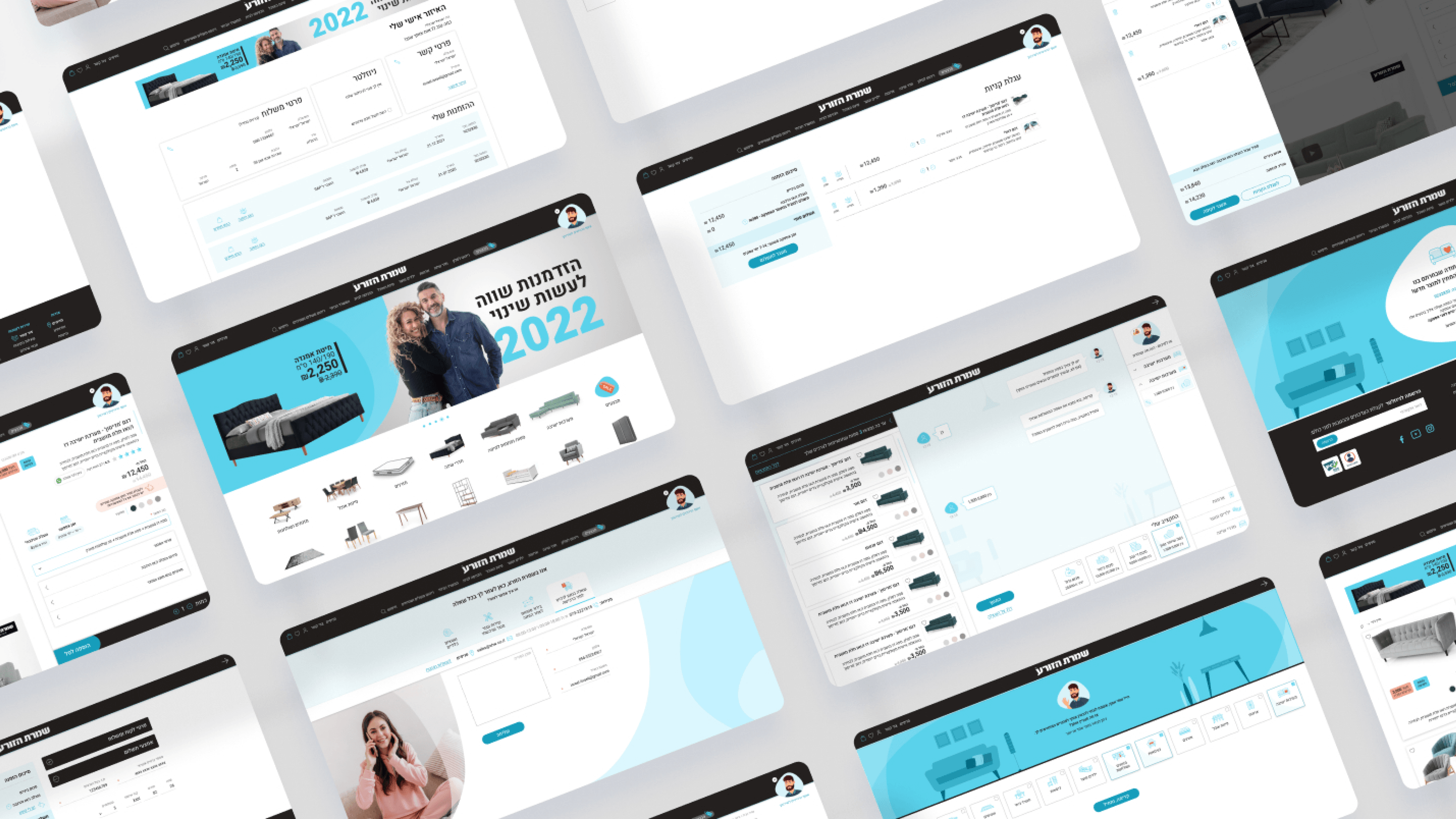
Shomrat Hazorea — Furniture E-commerce Website
When we rebuilt Shomrat HaZorea's e-commerce platform, the design system wasn't a styling afterthought — it was the contract that let design and R&D move together. The old transactional site had drifted into one-off product rows and inconsistent spec layouts; every new page meant re-deciding the basics. So I worked with engineering to define a shared component vocabulary up front: the visual cards that power Asaf's Guided Selling, the configuration controls on the product page, the collapsible logistics blocks, the media containers for in-home video. Each existed as a single source of truth, not a screenshot to reinterpret. For a CTO, the payoff is concrete. A configurator that drills from fabric down to the foam in a pillow is genuinely complex; if every interaction were bespoke, the maintenance burden would compound. Reusable, documented components meant R&D spent its effort on the hard real-time results feed, not on rebuilding buttons. It also kept the experience coherent as we bridged physical and digital retail across many product categories. A design system, treated as infrastructure, is what makes ambitious UX shippable and survivable.

Get in touch

Have a project in mind?

Drop a line. Meytalyav@gmail.com

Related articles

Shomrat Hazorea
Engineering LeadersIndustry-Specific Accessibility

Accessibility When the Product Is a Sofa You Can't Touch

Accessibility on a furniture platform has a trap specific to the industry: we sell with sensory richness — in-home video, fabrics, color, a configuration drill-down down to the foam in a pillow. The more immersive that gets, the easier it is to quietly exclude people who can't consume it visually. So our brief wasn't generic WCAG compliance. It was: every visual decision needs a real non-visual equivalent. Swatches need names and state, not just hue. A live results feed that updates silently is invisible to a screen reader. Accessibility is a parallel interaction contract — not a CSS pass at the end. Especially when the product is a sofa you can't touch.

Read
Shomrat Hazorea
Studio & Agency

Enterprise-Grade E-Commerce Projects: Why Your Studio Needs an Expert in Complex Configurators

Studio leaders: an e-commerce project for a large retail chain is a golden opportunity — but it demands expertise in product configurators and enterprise-grade commerce logic. My experience on the Shomrat Hazorea platform lets your studio present a "seal of approval" and close large projects without the learning curve.

Read
Shomrat Hazorea
Engineering Leaders

Designing a Configurator With Complex Logic: How Do You Prevent Performance Collapse on 3D Display Screens?

Engineering leaders: product configurators with 3D displays collapse when the designer thinks "what's prettiest" instead of "what's most efficient." In the Shomrat Hazorea project we developed Progressive Loading with a Performance Impact review for every decision. Design + performance from day one = a product that works in production.

Read
Meytal Dahan

About

Making complicated into easy for users.

Senior product designer with a decade of work across complex systems - financial risk platforms, legal operations, healthcare apps, manufacturing tooling and insurance portals. The common thread is depth: products where the data is rich, the users are expert, and the interface has to disappear into the work.