
Designing a Complex Product Configurator: How Do You Let a Customer "Build" a Piece of Furniture Without Losing Them?
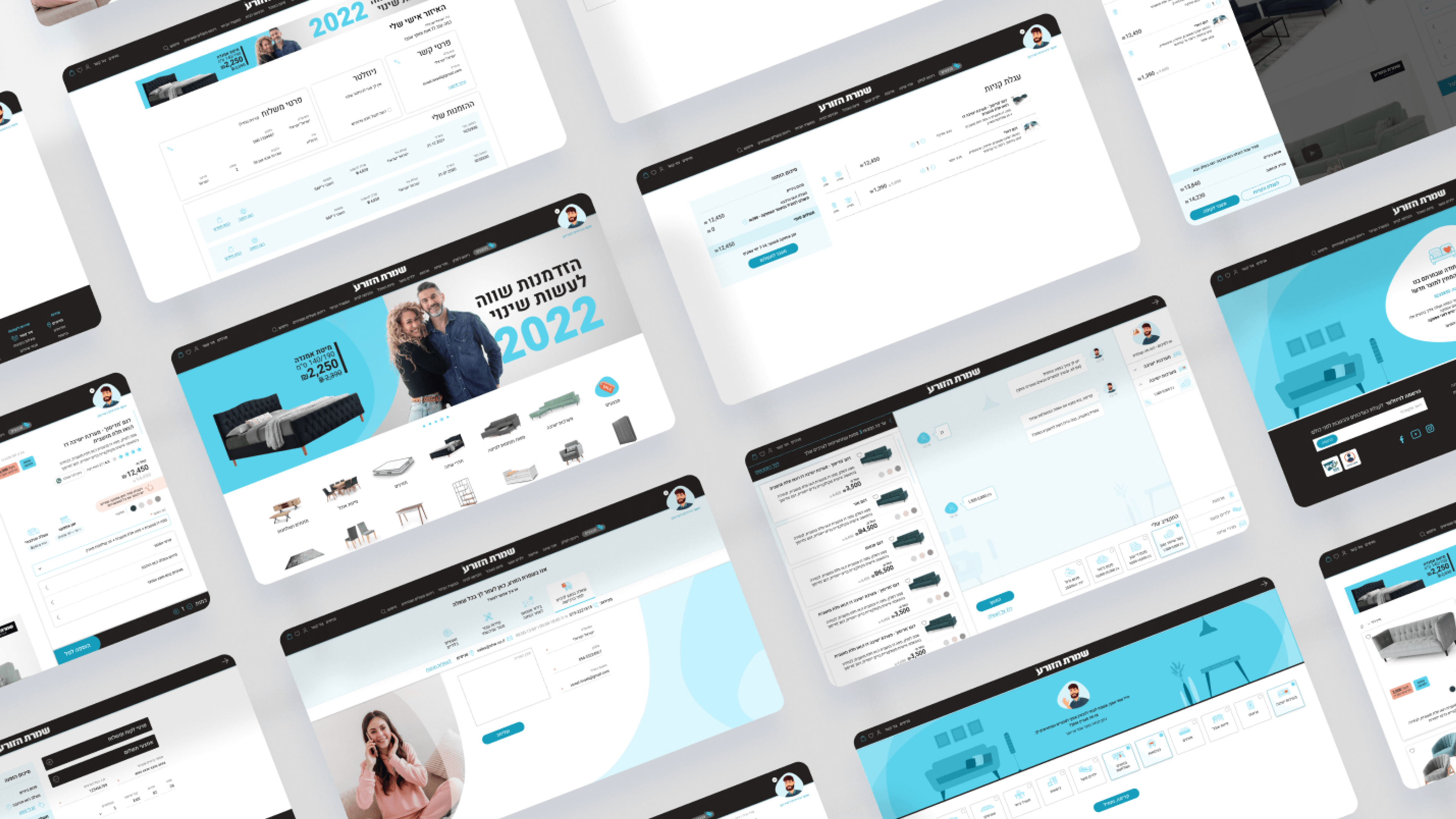
Product managers working on e-commerce sites for furniture and other customizable goods face a unique dilemma. On one hand, the brand's competitive edge is the ability to offer dozens of combinations of finishes, dimensions, fabrics, and configurations. On the other hand, the more choices you pile on, the greater the risk of decision paralysis — the customer gives up halfway through and abandons the cart.
In the project for Shomrat Hazorea, one of the oldest and largest furniture chains in Israel, the central product challenge was to design a configurator experience that would let the customer choose among hundreds of possible combinations — without feeling suffocated. The breakthrough rested on two principles. The first: Progressive Decision Making — the customer makes choices in a logical order that mirrors the way they naturally think (first you pick the model, then the size, and only then the fabric and color). The second: Visual Preview First — at every step the customer immediately sees the visual impact of their choice on the product, which creates instant positive reinforcement instead of doubt.
On top of that, we built a system of Smart Defaults — intelligent default values tailored to each product category. A customer who isn't sure about a particular choice gets a pre-guided option that produces a professionally styled product from the very first click.
For product managers in e-commerce for complex products, the takeaway is this: the more customizable the product, the more critical the role of design becomes. A well-designed configurator doesn't just raise conversion rates — it turns the act of buying itself into a pleasant experience that the customer wants to come back to.
Related articles

About
Making complicated into easy for users.
Senior product designer with a decade of work across complex systems - financial risk platforms, legal operations, healthcare apps, manufacturing tooling and insurance portals. The common thread is depth: products where the data is rich, the users are expert, and the interface has to disappear into the work.