Meytal Dahan
Back to insights

Where AI Belongs on a Conversion Site — and Where It Doesn't
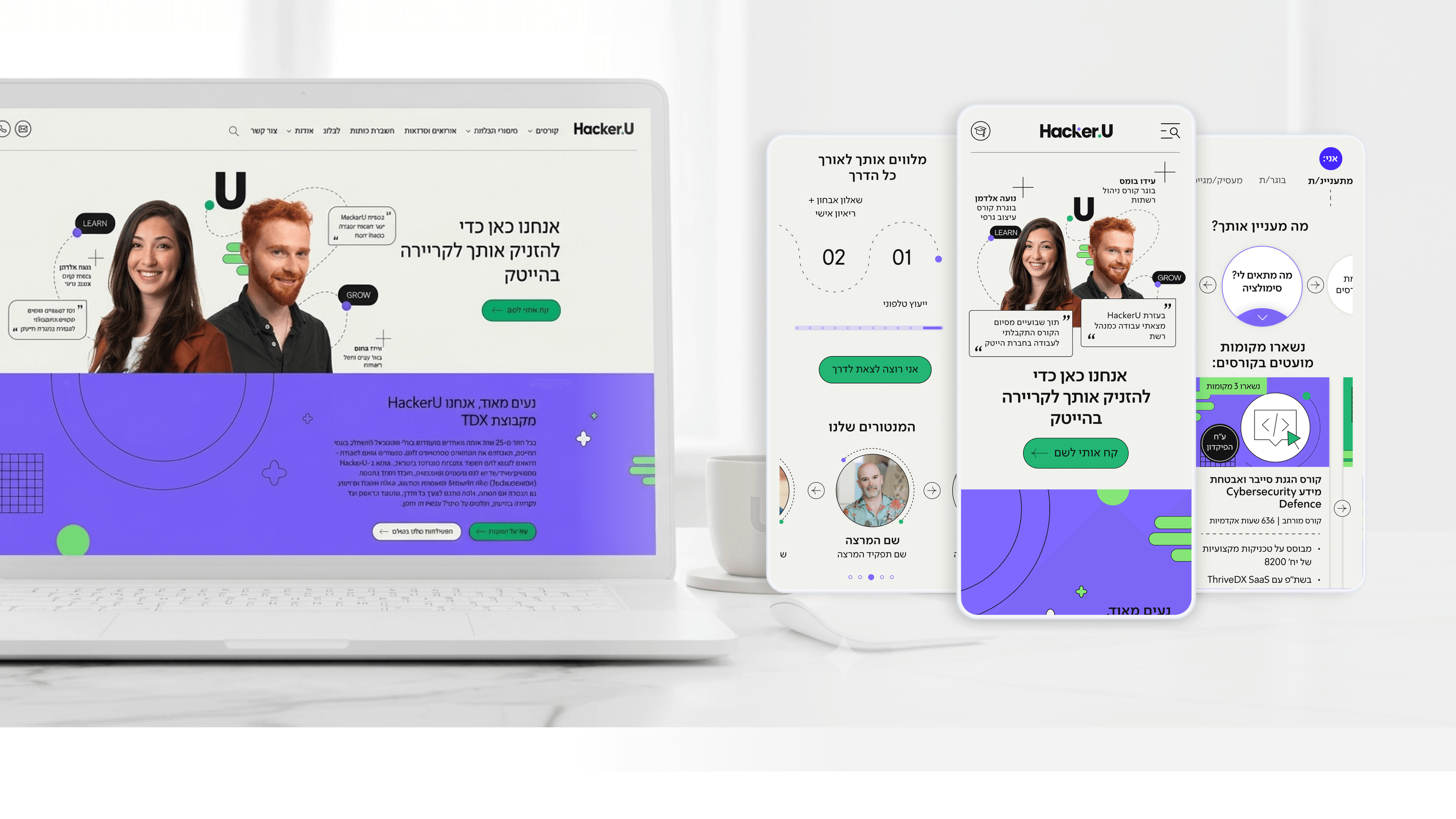
Hacker U — High tech training institute website
Every founder right now wants to know where AI fits in their product. My honest answer for a site like HackerU's is: probably less prominently than you'd hope, and more usefully than you'd expect. This is a conversion-driven marketing site, not a learning platform — there's no LMS, no dashboards, no place to bolt on a flashy 'AI tutor.' Pretending otherwise would betray the scope and the user. So the real AI strategy lives behind the experience, not in front of it. The personalized homepage already does the human-facing job: visitors self-identify, and the primary content card adapts. That same logic is exactly where intelligent tailoring could earn its place — learning which audience signals predict which paths convert, and refining what the entry layer surfaces over time, without ever turning the marketing site into a gimmick. The discipline I'd urge on any founder is restraint as strategy. AI should make the existing decision — should this visitor see the course page or the placement page next — sharper and quieter. The moment it becomes a feature users have to notice and operate, you've added complexity to a surface whose entire job is to reduce hesitation and convert.

Get in touch

Have a project in mind?

Drop a line. Meytalyav@gmail.com

Related articles

Hacker U
Engineering LeadersR&D Collaboration

A Modular Design System R&D Could Actually Build

Designers can hand R&D a beautiful comp that's a nightmare to build. On HackerU I tried to do the opposite. The marketing site — personalized homepage, dense course pages, a placement page — runs on one modular design system designed to be implemented, not just admired. Reusable, composable components with consistent states mean engineers stop re-solving the same layout on every page. The adaptive homepage card is one pattern, not five bespoke pages. A design system earns its keep when it makes the front end cheaper to maintain, not just nicer to look at.

Read
Hacker U
Project Managers

Backlog Prioritization in an EdTech System: How Do You Run a Project That Serves Thousands of Users Simultaneously?

Project managers in EdTech: is your backlog exploding because you're trying to serve students, instructors, and marketing all at once? In the Hacker U project we built a dual-impact matrix: recruitment versus Retention. Only features that contributed to both earned priority. 3-week Sprints with clear metrics - that's your number one guardian of the Gantt chart.

Read
Hacker U
Product Managers

Learning Experience (LX): How Do You Design a Course-Management System That Students Love?

Product managers in EdTech: students aren't rational users - they're human beings on a personal journey of learning and fear of failure. In the Hacker U project we built a Learning Experience with clear progress visualization, milestones, and positive reinforcement at moments of success. UX = LX. Design the journey, not just the screens.

Read
Meytal Dahan

About

Making complicated into easy for users.

Senior product designer with a decade of work across complex systems - financial risk platforms, legal operations, healthcare apps, manufacturing tooling and insurance portals. The common thread is depth: products where the data is rich, the users are expert, and the interface has to disappear into the work.