Meytal Dahan
Back to insights

Handing Off a System, Not a Pile of Screens
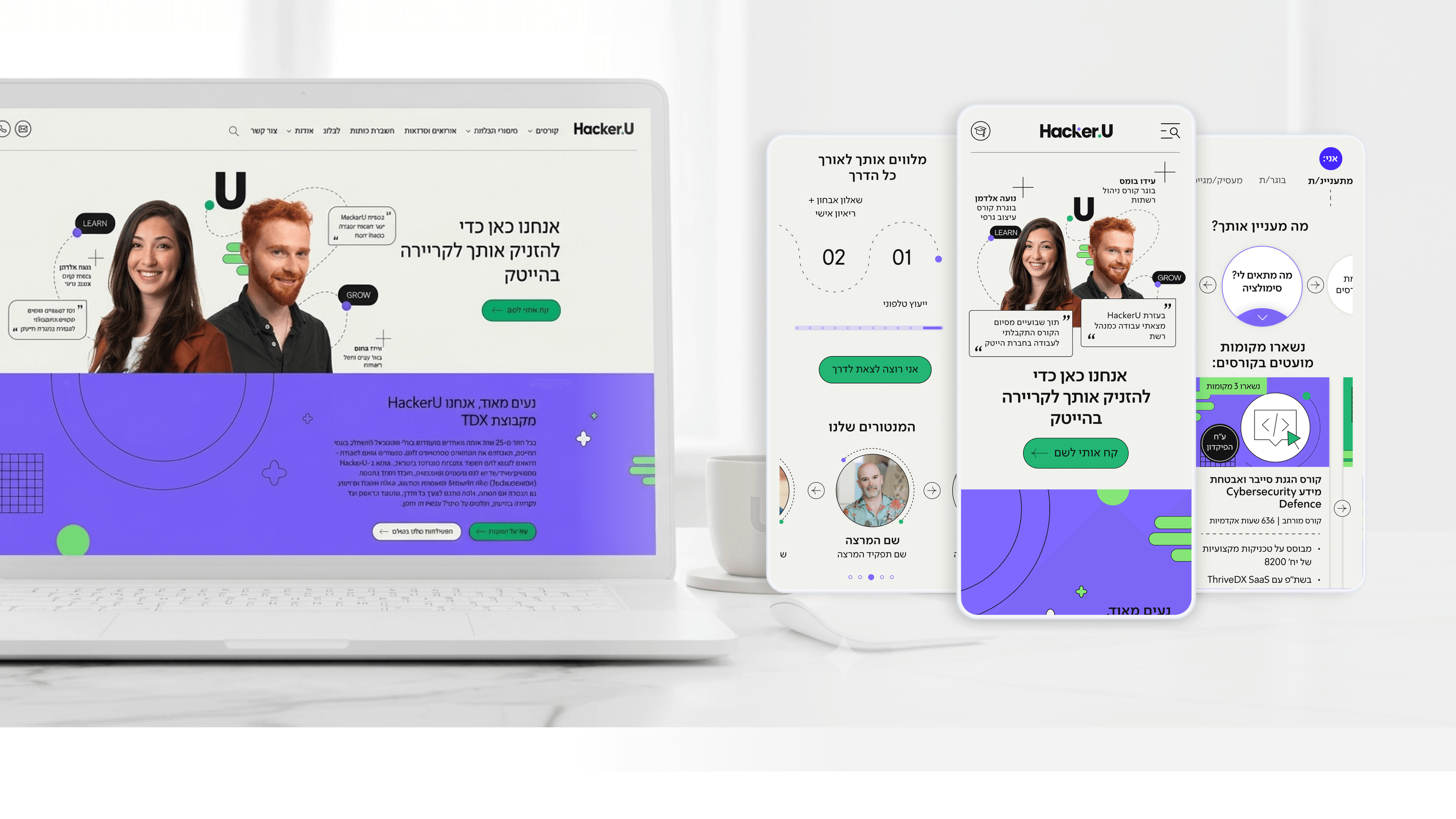
Hacker U — High tech training institute website
Handoff is where projects quietly lose time, and a PMO feels every minute of it. On HackerU I designed the delivery to minimize the back-and-forth that usually eats the gap between 'design done' and 'shipped.' The lever was the modular design system. Instead of handing developers a stack of disconnected page comps and hoping they'd infer the rules, I handed off components with defined states, spacing, and behavior — so a course page and the placement page reused the same building blocks rather than each becoming a fresh negotiation. For planning, this matters in two ways. First, estimates get more reliable: when developers build from known components, a new page is assembly, not invention. Second, it shrinks the review loop — fewer 'is this the right padding' questions, because the system already answers them. I also prioritized the handoff order around the hardest screens, like the dense course page with its salary table and syllabus, so the riskiest work happened while there was still runway to react. The result a PMO cares about: a handoff that behaves predictably, with ambiguity resolved up front rather than surfacing as rework after development has already started.

Get in touch

Have a project in mind?

Drop a line. Meytalyav@gmail.com

Related articles

Hacker U
Engineering LeadersR&D Collaboration

A Modular Design System R&D Could Actually Build

Designers can hand R&D a beautiful comp that's a nightmare to build. On HackerU I tried to do the opposite. The marketing site — personalized homepage, dense course pages, a placement page — runs on one modular design system designed to be implemented, not just admired. Reusable, composable components with consistent states mean engineers stop re-solving the same layout on every page. The adaptive homepage card is one pattern, not five bespoke pages. A design system earns its keep when it makes the front end cheaper to maintain, not just nicer to look at.

Read
Hacker U
Project Managers

Backlog Prioritization in an EdTech System: How Do You Run a Project That Serves Thousands of Users Simultaneously?

Project managers in EdTech: is your backlog exploding because you're trying to serve students, instructors, and marketing all at once? In the Hacker U project we built a dual-impact matrix: recruitment versus Retention. Only features that contributed to both earned priority. 3-week Sprints with clear metrics - that's your number one guardian of the Gantt chart.

Read
Hacker U
Product Managers

Learning Experience (LX): How Do You Design a Course-Management System That Students Love?

Product managers in EdTech: students aren't rational users - they're human beings on a personal journey of learning and fear of failure. In the Hacker U project we built a Learning Experience with clear progress visualization, milestones, and positive reinforcement at moments of success. UX = LX. Design the journey, not just the screens.

Read
Meytal Dahan

About

Making complicated into easy for users.

Senior product designer with a decade of work across complex systems - financial risk platforms, legal operations, healthcare apps, manufacturing tooling and insurance portals. The common thread is depth: products where the data is rich, the users are expert, and the interface has to disappear into the work.