Meytal Dahan
Back to insights

Designing a Role-Based Internal Portal: How Do You Balance Professionalism with Community?
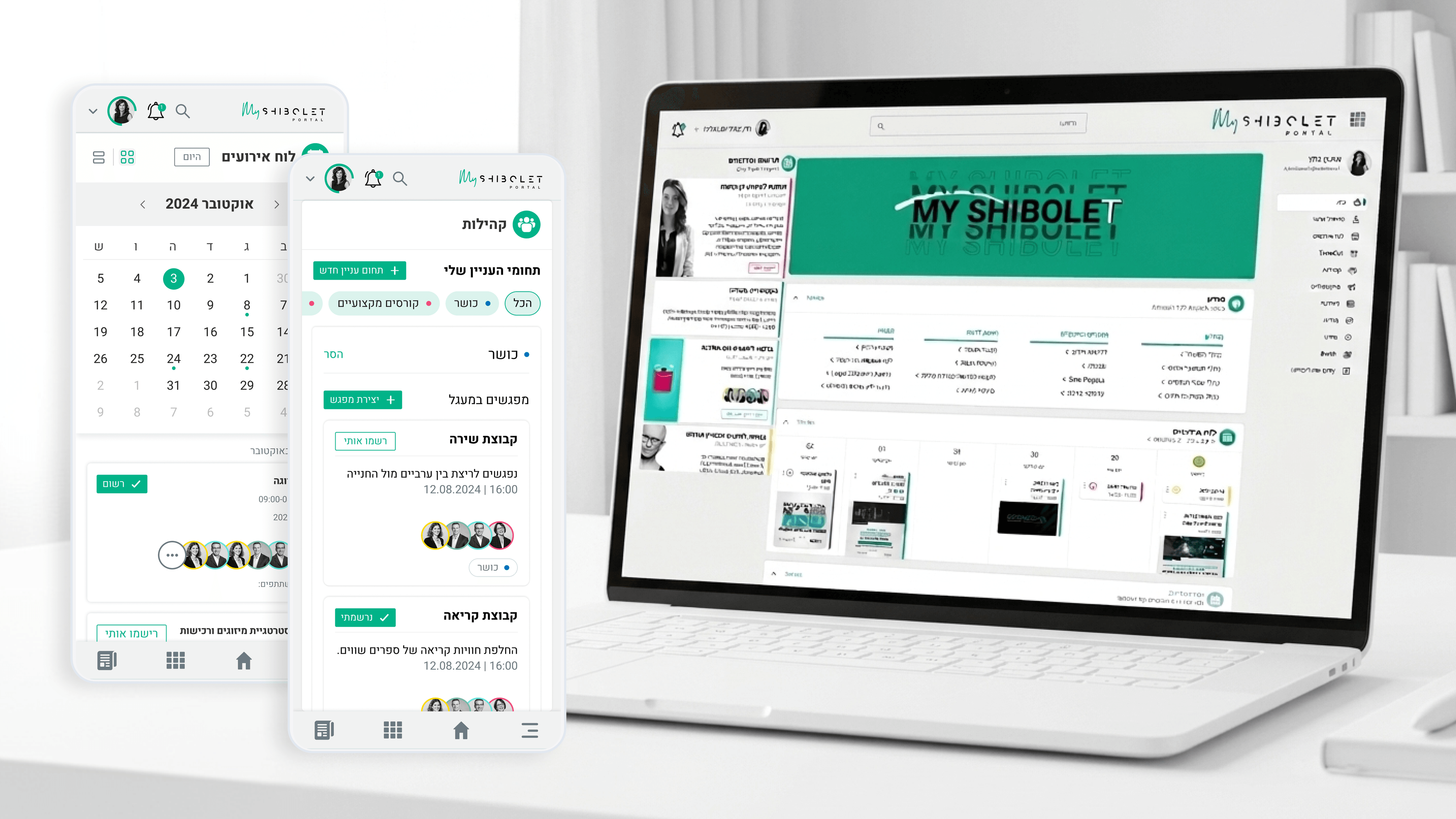
Shibolet & Co. — Designed the firm's internal community hub - balancing the gravitas of a top legal practice with a social tone inviting enough that employees would actually use it - into a space precise enough to belong inside the firm and warm enough to feel lived-in.
Designing an internal platform for a leading law firm is a dual product challenge. On one hand, it's a professional system that stores critical legal information, case law, and ethics guidelines. On the other hand, management's strategic goal was to create a community-driven, welcoming, and human experience that strengthens the organization's culture. At the Shibolet & Co. law firm, cracking the product required precise mapping of user personas — senior partners, specialist attorneys, interns, and operations teams — where each persona has a different role and needs to see different information. The solution is built on a hierarchical content architecture tailored to the user's role (Role-Based UX). The top layer of the portal surfaces community content — birthdays, company events, professional wins, and congratulations — creating an immediate sense of belonging the moment you log in. The deeper layers reveal professional information according to permissions. Visually, the balance was achieved through softer typography in the community areas and a more formal palette in the legal areas. This isn't just design — it's a cultural statement. Product Managers in knowledge-worker organizations need to stop thinking about internal portals as a boring "intranet." When the portal becomes a tool employees are happy to open in the morning, engagement rises, participation in organizational knowledge-sharing grows, and the business value of the internal product skyrockets.

Get in touch

Have a project in mind?

Drop a line. Meytalyav@gmail.com

Related articles

Shibolet & Co.
Engineering LeadersProject-Specific Data Visualization

Visualizing a Community, Not a Dashboard

Say data visualization to engineers and they picture analytics dashboards. Shibolet's internal community hub needed the opposite. It was a community hub for a law firm, not an admin reporting tool. The job was making events, courses, benefits, and interest groups scannable and inviting, with light cues like who's attending or active. No charting engine, no KPI grid. Project-specific data viz means the representation answers this domain's real question. Here it was always: what's happening in my community, and what's for me?

Read
Shibolet & Co.
Project Managers

Running a Digital Project in a Legal Organization: How Do You Hit Deadlines When Partners' Time Is Worth Gold?

Project Managers in legal organizations — your biggest pain point is the billable hours of your partners. On the Shibolet & Co. project we developed a "Batched Approvals" method paired with Figma prototypes: every decision is presented with 3 clear alternatives, and a partner can sign off in 15 minutes instead of an hour. That's how you protect the Gantt and the budget.

Read
Shibolet & Co.
Product ManagersTypography & Visual Hierarchy

Typography as Triage: Ordering a Legal Community Hub

PMs keep asking: how do users know what matters when one screen does five jobs? On Shibolet's internal hub, a single view carried a compliance notice, a new course, a firm event, and a community invite. I didn't solve that with more tabs. I solved it with typography. A deliberate type ramp let official items read with authority and social content stay warm, in the same layout. Visual hierarchy is product triage made visible. Get the type ramp right and you stop negotiating screen real estate per stakeholder.

Read
Meytal Dahan

About

Making complicated into easy for users.

Senior product designer with a decade of work across complex systems - financial risk platforms, legal operations, healthcare apps, manufacturing tooling and insurance portals. The common thread is depth: products where the data is rich, the users are expert, and the interface has to disappear into the work.